News CBDC
e-CNY Upgrade Expands PBOC Infrastructure With DCEPS and SMART Contracts
Key points
The PBOC announced a major e-CNY infrastructure upgrade on 21 October 2026, introducing the DCEPS platform and SMART Contract framework to support the shift to digital deposit money.
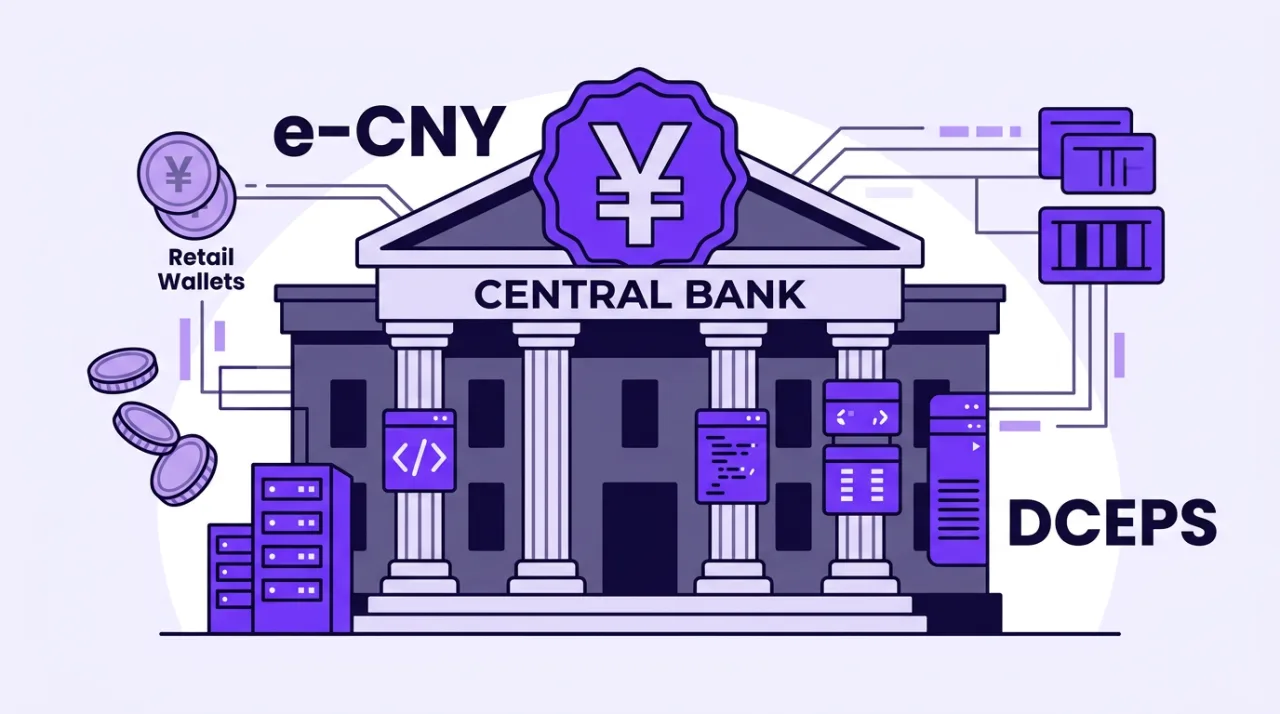
On 21 October 2026, at the e-CNY Annual Conference held during the Financial Street Forum in Beijing, the PBOC’s e-CNY Operation Management Center unveiled a comprehensive infrastructure upgrade. The announcement introduced the Digital Currency & Electronic Payment System (DCEPS) and the e-CNY SMART Contract ecosystem service framework.
The upgrade supports the transition to digital deposit money that took effect on 1 January 2026. Under this model, commercial-bank customer holdings of e-CNY are treated as bank deposit liabilities and counted in M1. Eligible real-name wallet balances now earn interest and receive deposit-insurance protection.
e-CNY Upgrade Details: DCEPS Platform and SMART Contract Framework
DCEPS operates as a 24/7 central-bank platform that integrates issuance management, retail and wholesale payments, blockchain functions, cross-border settlement via CBETS, liquidity and wallet management, data services, and intelligent risk controls. The system connects 121 participants and currently supports 30 operating institutions, mainly major commercial banks.
The SMART Contract framework—defined as Standardized, Machine-enforced, Accessible, Rule-based, Trustworthy—provides an open service layer for programmable, multi-party applications. It is designed to lower integration and liquidity costs while enabling reuse of contract templates across use cases such as supply-chain finance, fiscal subsidies, wages, and prepaid funds.
September 2026 transaction data show 99.67 million payments valued at 1.87 trillion yuan, representing year-on-year increases of 12 percent in volume and 123 percent in value. Cumulative figures through end-September reached 4.3 billion transactions worth approximately 31 trillion yuan.
Background on the Shift to Digital Deposit Money
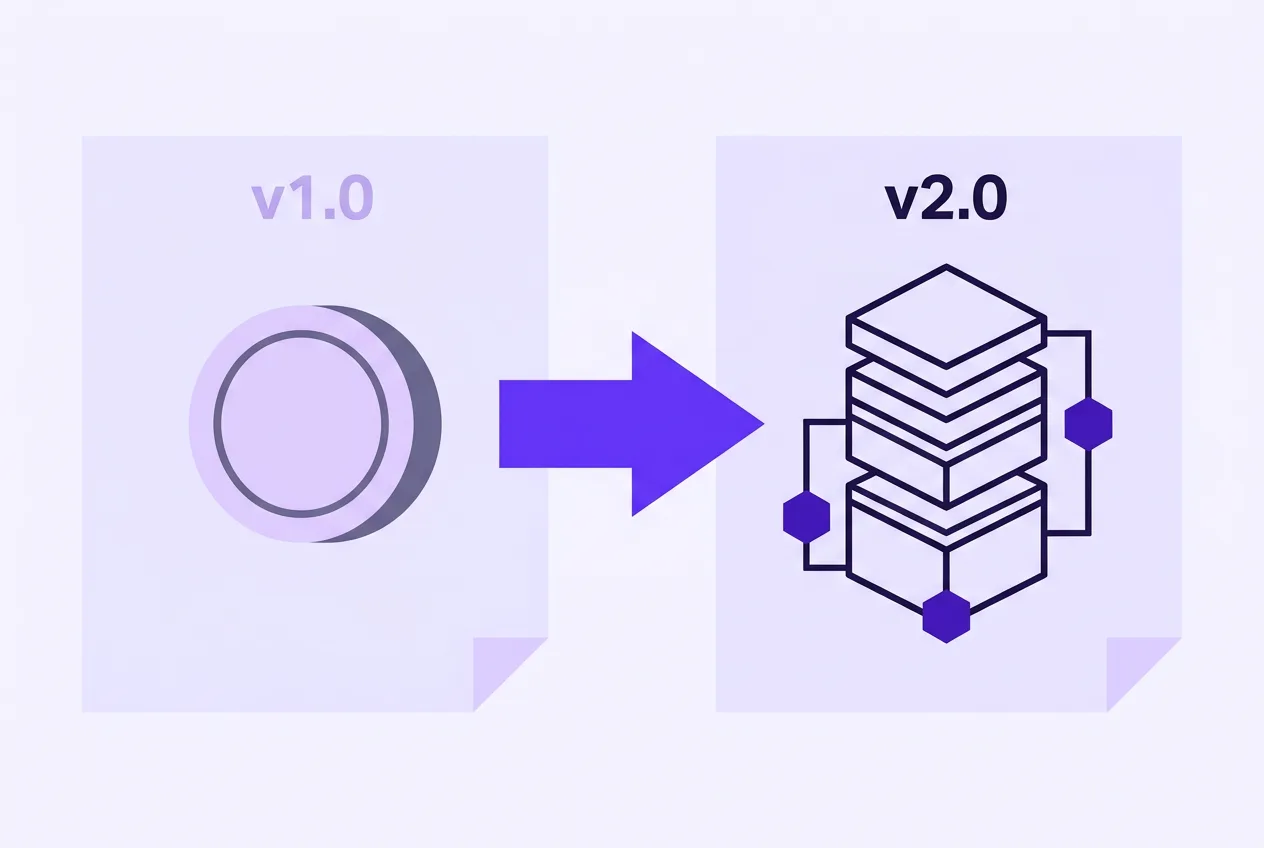
PBOC research on central-bank digital currency began in 2014, with pilot programs starting in late 2019. The move from the earlier cash-like version 1.0 to the deposit-based version 2.0 addresses commercial-bank concerns about deposit displacement and creates conditions for tokenized deposits and smart-contract applications.
Deputy Governor Lu Lei stated that the new infrastructure forms the first comprehensive central-bank platform and deepens the hybrid operating model. Governor Pan Gongsheng referenced the early-2026 policy change that reclassified e-CNY holdings as deposits. The dual-layer architecture now separates retail deposit management at commercial banks from wholesale settlement at the central bank.
The account-based hybrid model remains compatible with on-chain and off-chain, as well as online and offline, payments. Commercial banks can integrate e-CNY into existing deposit, lending, remittance, and investment products while maintaining regulatory compliance.
Next Steps for Broader Participation and Cross-Border Use
The PBOC intends to encourage additional licensed institutions to connect to DCEPS and to expand smart-contract and cross-border channels. Recent examples include payment corridors linking Guangxi with Hong Kong, Laos, Malaysia, and Singapore.
Future integration work will focus on aligning e-CNY with banks’ asset-liability and reserve-management systems. The central bank will continue to monitor liquidity effects and risk-control performance as transaction volumes grow.
Frequently asked questions
What is the DCEPS platform introduced in the e-CNY upgrade?
DCEPS is a 24/7 central-bank payment and settlement system that handles issuance, retail and wholesale transactions, blockchain functions, cross-border settlement, and risk controls for e-CNY.
How does the shift to digital deposit money affect e-CNY holdings?
Since 1 January 2026, customer e-CNY balances at commercial banks are treated as deposits counted in M1, can earn interest, and are covered by deposit insurance.
What does the SMART Contract framework enable?
The framework supplies standardized, machine-enforced templates that support programmable services such as supply-chain finance, subsidies, and wages while lowering integration costs.
How many institutions currently participate in the upgraded e-CNY system?
As of late October 2026, 30 operating institutions and 121 system participants are connected to DCEPS.
Comments
No comments yet. Be the first!