News ECB
Digital Euro Network Providers Selected by ECB for DESP Connectivity
Key points
The ECB named two consortia to supply network connectivity for the digital euro on 30 October 2026, with contracts covering pilot phases through potential 2029 issuance.

The European Central Bank selected two consortia on 30 October 2026 to act as network service providers for the digital euro project. Nexi Payments with Deutsche Telekom and Telefónica with Indra will supply connectivity between payment service providers, national central banks and the Digital Euro Service Platform.
Contract Details and Implementation Timeline
The first-ranked consortium of Nexi Payments S.p.A. and Deutsche Telekom Business Solutions GmbH signed its contract on 28 September 2026. This agreement initially supports pilot connectivity requirements and runs for ten years with built-in flexibility for service adjustments. The second-ranked group, comprising Telefónica de España, Telefónica Global Solutions and Indra Soluciones Tecnologías de la Información, will begin operations in May 2027 under a parallel ten-year arrangement.
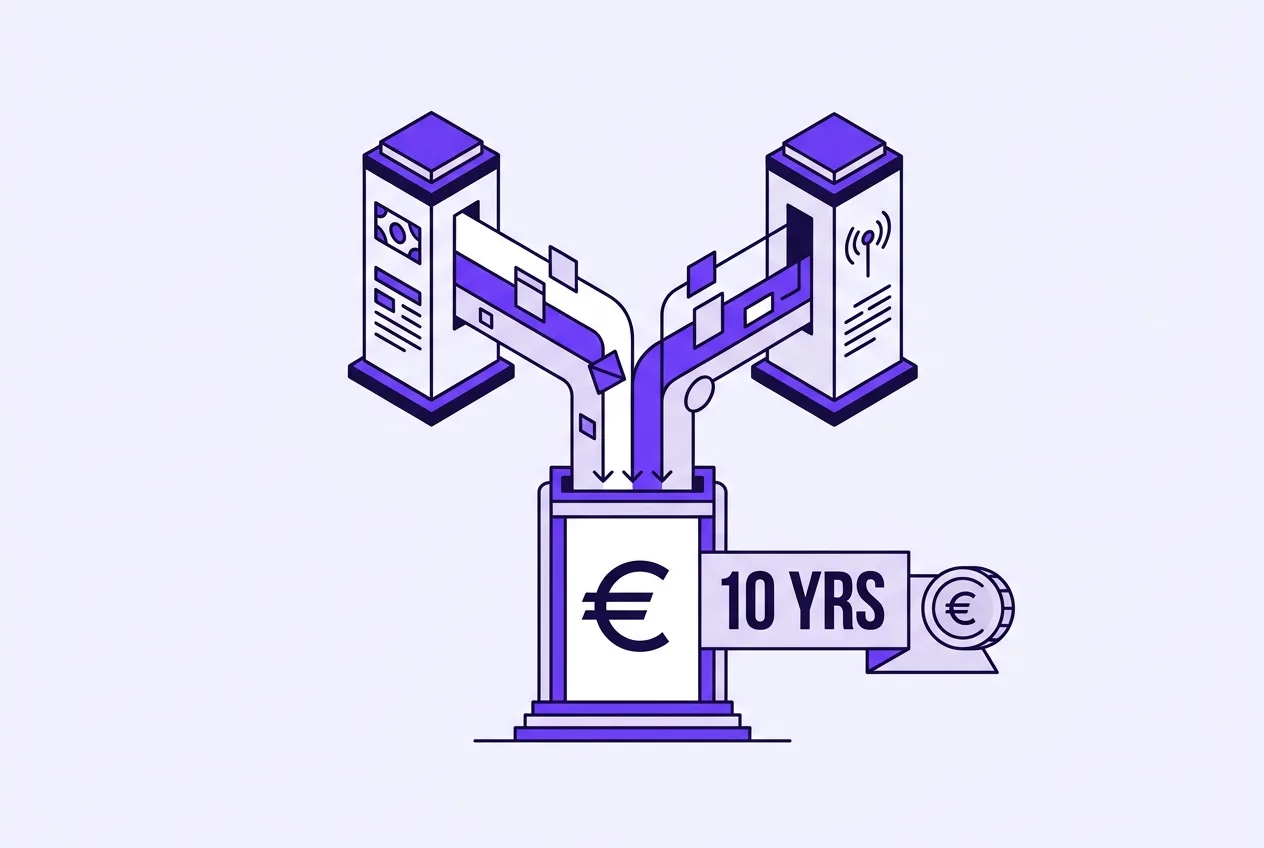
Both providers will deliver redundant links that connect participating payment service providers to the Digital Euro Service Platform. The dual-supplier structure mirrors existing Eurosystem arrangements such as TARGET services and removes single-point dependency risks. Payment service providers offering the digital euro can route traffic through either network without restriction.
Readiness for full-scale operations is scheduled for 2029, conditional on a positive decision by the ECB Governing Council and passage of necessary EU legislation. The contracts allow the central bank to scale or modify services as the project evolves.
Project Context and Next Steps
The network provider selection forms one element of the digital euro preparation phase that also includes component tenders for fraud management and offline functionality. A separate pilot involving 36 payment service providers is planned to start in the second half of 2027 and run for twelve months; this exercise remains internal and does not constitute a public launch.
The ECB issued its call for applications on 27 August 2025 and conducted the tender process that concluded with the October 2026 announcement. The dual-provider model ensures operational resilience while the broader technical architecture continues to advance through parallel workstreams.
Market participants tracking central bank digital currency developments can monitor the 2027 pilot results and any subsequent legislative updates from the European Parliament and Council. These milestones will determine the final timeline for any potential issuance after 2029.
Frequently asked questions
Which consortia did the ECB select for digital euro network services?
The ECB chose Nexi Payments with Deutsche Telekom and Telefónica with Indra. The first group began its contract in September 2026; the second starts in May 2027.
When will the digital euro network providers be operational?
Both providers must be ready by 2029 to support potential issuance. Initial pilot connectivity work begins earlier under the first contract signed in September 2026.
What role do the network service providers play in the digital euro?
They supply connectivity between payment service providers, national central banks and the Digital Euro Service Platform, ensuring redundant communication paths for the system.
Does the selection guarantee a 2029 digital euro launch?
No. Operations remain subject to an ECB Governing Council decision and final EU legislation. The 2029 date marks technical readiness only.
Comments
No comments yet. Be the first!