News Regulation
South Korea Digital Asset Basic Act Bill Submission Targets Exchange Ownership Caps
Key points
South Korea’s Financial Services Commission plans to submit the Digital Asset Basic Act to the National Assembly in November 2026, including caps on exchange shareholder stakes and rules for won-pegged stablecoins.

South Korea’s Financial Services Commission is finalizing the draft of the Digital Asset Basic Act for submission to the National Assembly this month. The comprehensive framework would shift virtual asset service providers from registration to licensing and introduce ownership limits for major exchange shareholders.
South Korea Digital Asset Basic Act Covers Stablecoin and Exchange Rules
The bill addresses issuance of won-pegged stablecoins, conduct standards for licensed platforms, disclosure requirements, and user protection measures. It builds directly on the Virtual Asset User Protection Act that took effect in July 2024. FSC Chairman Lee Eok-won has referenced a document exceeding 135 articles in the final version.
A central provision caps major shareholders’ stakes in exchanges at 15–20 percent, modeled on limits under the Capital Markets Act for alternative trading systems. Existing platforms would receive a transition period of one to three years to comply. Discussions continue on whether voting-rights restrictions could replace outright ownership caps.
Won-denominated stablecoins are expected to require issuance through bank-led consortia, with the Bank of Korea favoring at least 50 percent plus one share held by banks. Fintech and other participants may gain access through parliamentary amendments. Separate forex-law changes are planned after enactment.
Context and Timeline for Passage
The legislation responds to roughly 160 trillion won in digital-asset outflows recorded last year and aligns with upcoming stablecoin frameworks in the United States and the European Union’s MiCA regime. It follows the FSC’s earlier roadmap for greater institutional participation in the market.
Passage is tied to a proposed fourth postponement of the 22 percent crypto gains tax, now targeted for 2029 instead of January 2027, along with a three-year loss carryforward provision. Both the tax delay and the Digital Asset Basic Act require National Assembly approval.
The FSC is scheduled to submit the government draft around 23 November 2026. The National Assembly Political Affairs Committee subcommittee is expected to begin review later that month, with lawmakers from both major parties indicating support for expedited consideration. Exact ownership thresholds and issuer eligibility criteria remain subject to change during committee deliberations.
Market Implications and Related Developments
The shift to a licensing regime would impose stricter capital, governance, and compliance obligations on exchanges compared with the current registration system. Operators will need to prepare revised ownership structures and enhanced disclosure processes ahead of any final transition deadlines.
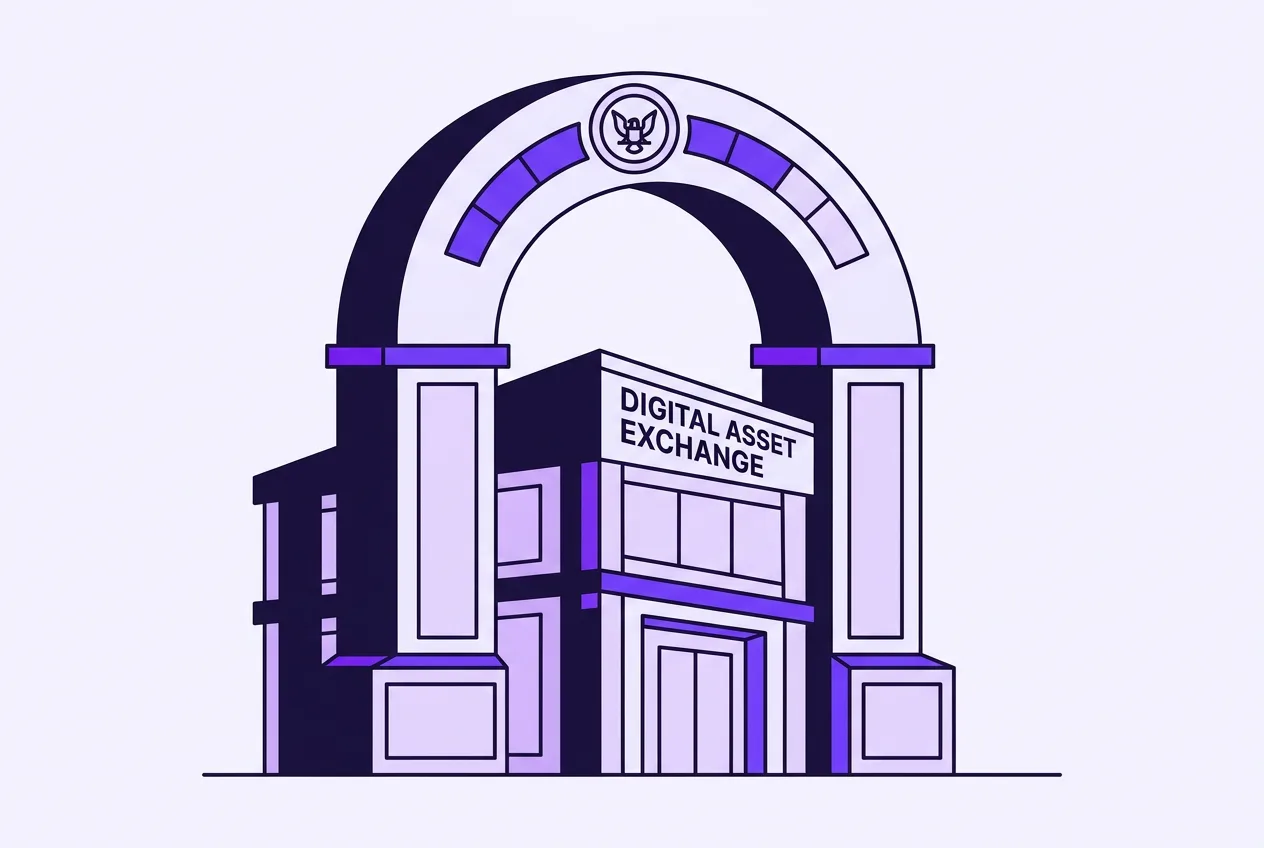
Stablecoin provisions aim to keep won-denominated issuance under domestic oversight while permitting limited non-bank participation. Market participants are monitoring how bank-consortium requirements interact with existing fintech platforms that already handle won settlements.
Parliamentary debate is likely to focus on balancing investor protection with market competitiveness, especially given parallel regulatory moves in other jurisdictions. Final passage by year-end remains the stated goal of the current legislative session.
Frequently asked questions
When will South Korea submit the Digital Asset Basic Act?
The Financial Services Commission plans to submit the government draft to the National Assembly in November 2026, with reports pointing to around 23 November as a likely date.
What ownership limits does the bill propose for crypto exchanges?
The leading proposal caps major shareholders’ stakes at 15–20 percent, with a one-to-three-year transition period for existing platforms. Alternative voting-rights limits are still under discussion.
How will won-pegged stablecoins be issued under the new rules?
Issuance is expected through bank-led consortia where banks hold at least 50 percent plus one share. Additional fintech participation may be clarified during parliamentary review.
Is the crypto tax delay linked to the Digital Asset Basic Act?
The ruling party has tied passage of the act to a fourth postponement of the 22 percent gains tax until 2029, along with a three-year loss carryforward, both requiring National Assembly approval.
Comments
No comments yet. Be the first!