News CBDC
Drex Wholesale CBDC Pilot Continues With Banco Central do Brasil and Commercial Banks
Key points
Banco Central do Brasil maintains its Drex wholesale CBDC efforts with commercial banks after restructuring the original pilot platform in late 2025.
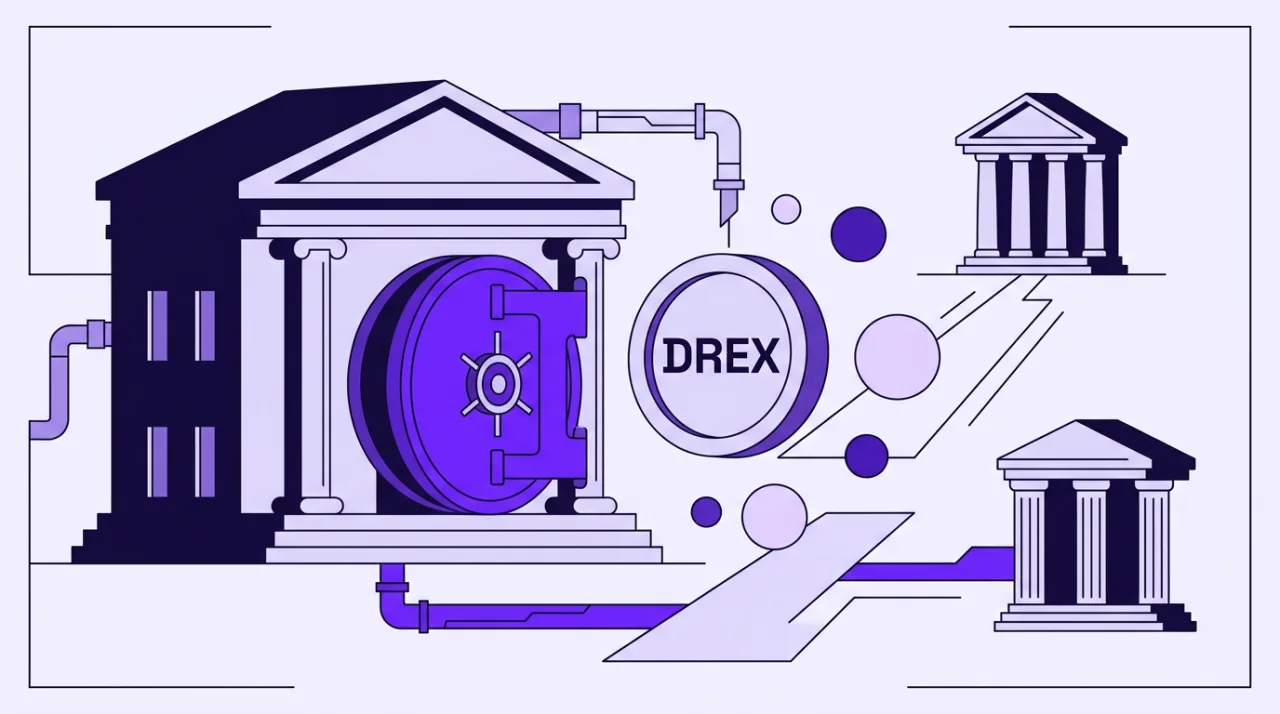
Banco Central do Brasil began testing its Drex wholesale CBDC in 2023 through a pilot that included commercial banks and other institutions. The program examined settlement of tokenized assets and deposits on a distributed ledger platform, with Phase 1 concluding in October 2024 and Phase 2 running until November 2025.
Drex Wholesale CBDC Pilot Phases and Results
Phase 1 involved 16 consortia led by banks such as Itaú, Bradesco, Santander, Banco do Brasil and Nubank, along with B3 and technology providers. Participants executed roughly 420 wholesale transactions, 1,900 retail token transactions and 1,263 tokenized federal bond transactions on a Hyperledger Besu network. Tests covered privacy mechanisms, smart contracts and delivery-versus-payment settlement of tokenized government securities.
Phase 2 selected 13 use cases from 42 proposals. These covered receivables discounting, trade finance for agricultural commodities, collateralized credit instruments and foreign exchange optimization. Development work started after selection and continued privacy and programmability trials until the test platform closed in November 2025.
The shutdown followed unresolved issues balancing transaction confidentiality with regulatory oversight and LGPD compliance, plus elevated maintenance costs. A Phase 2 report is scheduled for early 2026. No production wholesale CBDC system has been deployed as of November 2026.
Background, Challenges and Next Steps
The Drex project aimed to create an interoperable environment for tokenized asset settlement using central bank money. It built on the success of the Pix instant payment system while confronting the trade-offs between privacy, scalability and compliance requirements. Private sector initiatives by B3, Anbima and Núclea have continued independently in parallel.
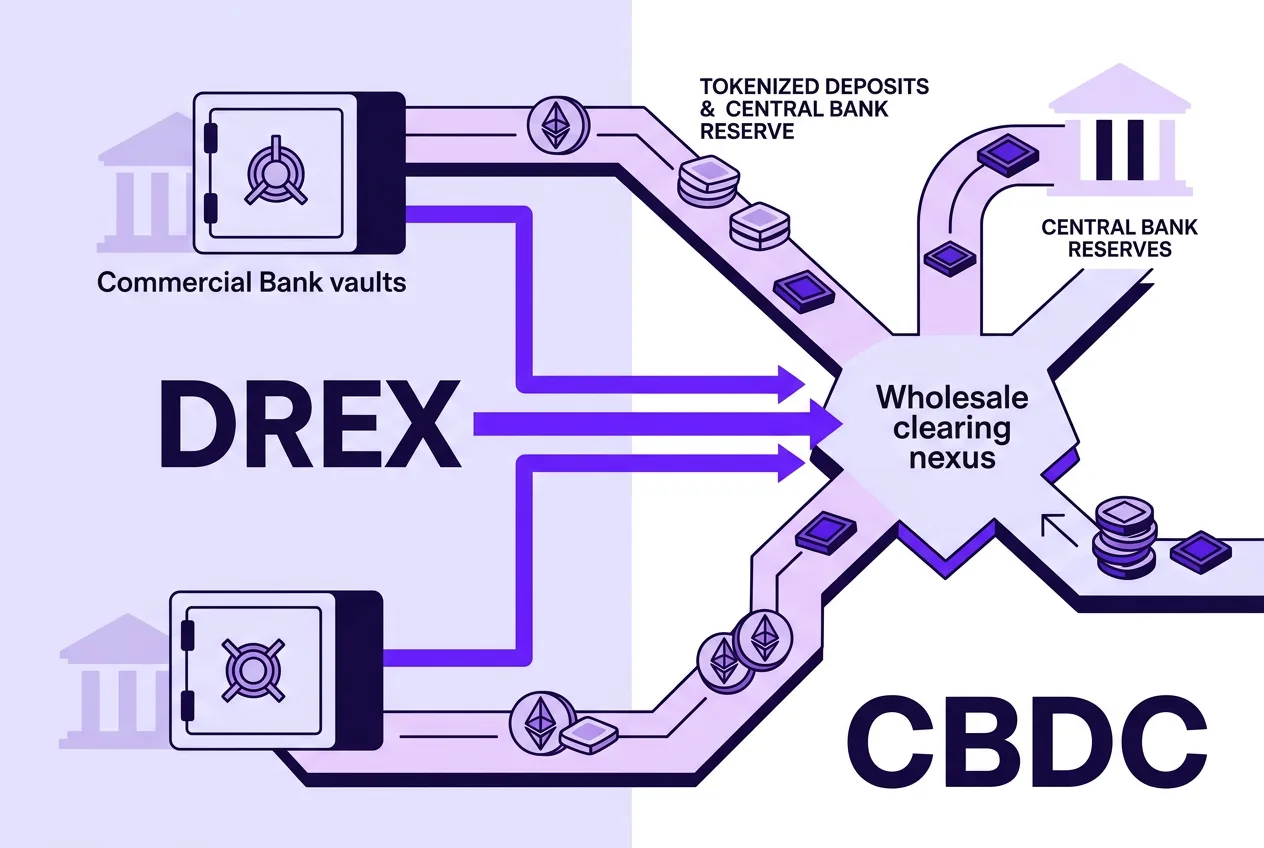
Bank president Gabriel Galípolo and project coordinator Fábio Araújo have stated that the tested technology proved unsuitable for live operations but supplied valuable operational insights. The central bank has not abandoned the Drex objective and plans to explore alternative technical approaches.
Phase 3 discussions are scheduled to begin in early 2026. The narrower initial focus will target credit collateral and lien reconciliation between institutions. Broader tokenization, retail wallets and full production rollout have been deferred. Integration options with existing Pix and Open Finance infrastructure remain under review.
Market Context for Tokenized Deposits
Wholesale settlement capabilities continue to attract interest from Brazilian financial institutions even without a live central bank platform. Commercial banks and clearing houses have advanced their own tokenized deposit experiments while awaiting clearer regulatory parameters from Banco Central do Brasil.
The restructured Drex approach signals a shift toward technology-agnostic solutions and limited-scope use cases. This reduces immediate infrastructure costs while preserving the long-term goal of central bank money settlement for tokenized instruments. Market participants are monitoring the Phase 3 business case studies expected throughout 2026.
Frequently asked questions
What happened to the original Drex test platform?
Banco Central do Brasil shut down the Hyperledger Besu platform in November 2025 after Phase 2 due to unresolved privacy, scalability and compliance challenges along with high operating costs.
Which banks participated in the Drex pilot?
Major institutions including Itaú, Bradesco, Santander, Banco do Brasil and Nubank led consortia during Phase 1 alongside B3 and technology firms.
What is the focus of Drex Phase 3?
Phase 3 will examine business cases for credit collateral and lien reconciliation between institutions using a technology-agnostic model starting in early 2026.
Has Brazil launched a live wholesale CBDC?
No production system exists as of November 2026. The project continues in restructured form without retail wallets or broad tokenization features.
Comments
No comments yet. Be the first!