News CBDC
Sweden Digital Krona Legislation Preparation Urged by Riksbank
Key points
On 15 October 2026 the Riksbank asked the Riksdag to begin legislative work on a possible digital krona driven by security concerns and digital euro developments.

On 15 October 2026 Sweden’s Riksbank sent an official communication to the Riksdag’s Committee on Finance requesting that preparations for legislation on a potential digital krona begin immediately. The central bank has not decided whether to issue the currency but stressed that any future issuance requires explicit parliamentary consent under the 2022 Sveriges Riksbank Act.
The letter, dated 7 October, highlights three main drivers: the need for resilient payment systems amid geopolitical risks, progress on the ECB digital euro, and long-term pressure from foreign-currency stablecoins on the krona’s domestic role. Implementation, once authorised, would take at least five years for infrastructure, integration and public rollout.
Riksbank Communication Details
The Riksbank letter states that a dedicated digital krona law and amendments to multiple existing statutes would likely be required. It notes that technical infrastructure, bank and payment-service-provider integration, and public information campaigns cannot start until legislative clarity exists. The central bank therefore recommends that a public inquiry be appointed now so that the Riksdag can act quickly if it later chooses to proceed.
No position has been taken on issuance itself. The March 2026 Payments Report had already called for such an inquiry, and the new communication repeats that recommendation while adding updated context on security and international developments. A 2023 Payments Inquiry had concluded that societal need was insufficient at the time but left open the possibility of reassessment if global conditions changed.
The Riksbank also points out that any future digital krona could be designed for compatibility with the digital euro infrastructure, potentially improving cross-border resilience without duplicating development costs. It estimates that legislative mapping alone would require additional time beyond the five-year implementation window once work begins.
Background and International Context
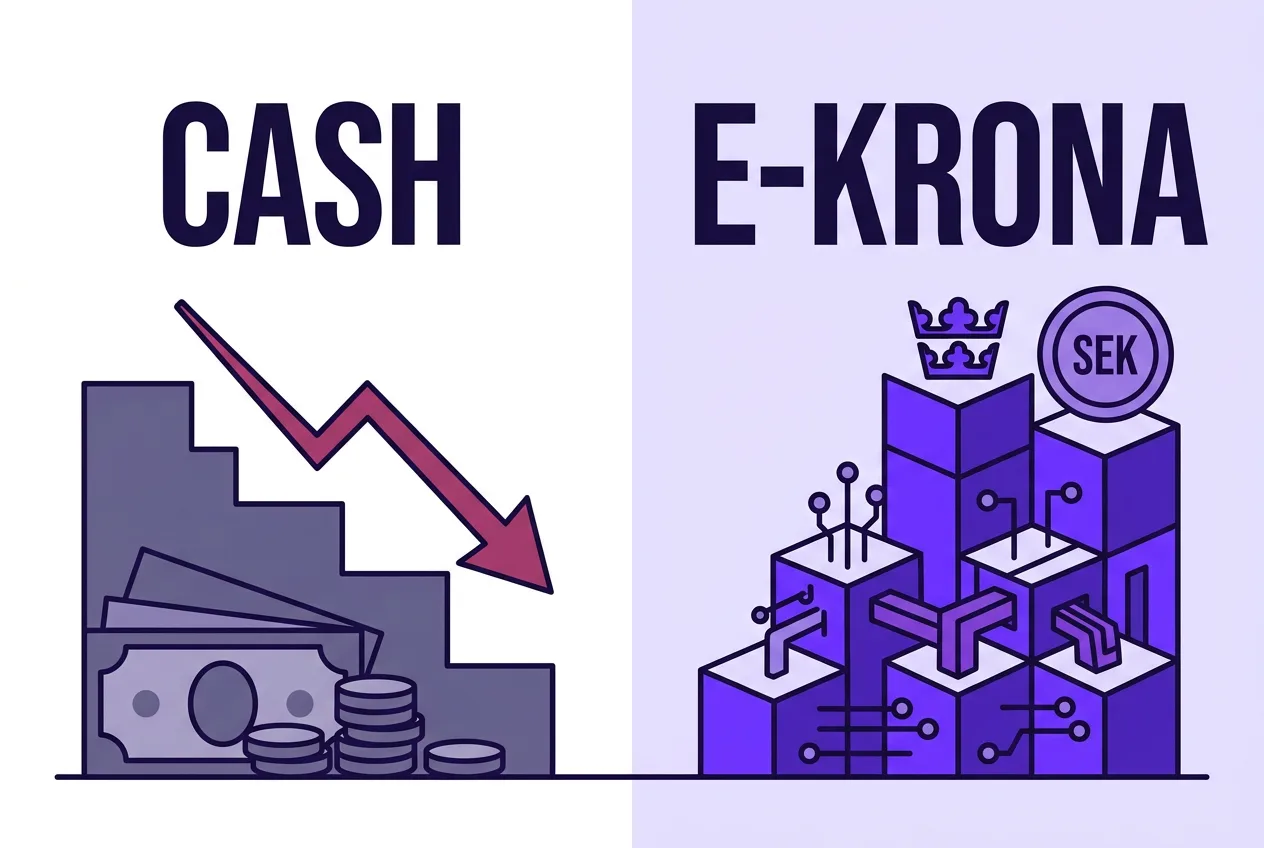
Sweden’s cash usage has declined steadily for more than a decade, leaving the payments system increasingly dependent on private operators. The Riksbank has monitored this trend through successive reports and has conducted technical experiments on a digital krona since 2020. The current communication marks the first formal request to parliament for legislative groundwork.
Externally, ECB trilogue negotiations on digital euro rules are scheduled to conclude in 2026, with a twelve-month pilot planned for the second half of 2027. First issuance could occur as early as 2029, but only after regulation is adopted. The Riksbank letter explicitly references these timelines as a factor that could affect Swedish monetary sovereignty if left unaddressed.
Foreign-currency stablecoins, predominantly denominated in US dollars, are cited as a longer-term risk to the krona’s unit-of-account function inside Sweden. The communication does not quantify volumes but notes that continued growth could reduce the effectiveness of domestic monetary policy transmission. It also flags hybrid-threat scenarios in which offline payment capability would become essential for national security.
Next Steps for Parliament and Market Participants
The Riksdag’s Committee on Finance is expected to consider whether to appoint an investigator to map required legislative changes. Any such inquiry would examine constitutional, data-protection, anti-money-laundering and consumer-protection rules that a digital krona would affect. The Riksbank has offered to support the process with technical expertise but has no formal role in the legislative decision.
Market participants, including banks and payment-service providers, would need to integrate new settlement rails if a digital krona is eventually launched. The central bank has indicated that offline functionality and interoperability with existing instant-payment systems would be core requirements. No timeline for a decision on issuance has been set, and the Riksbank continues to state that cash will remain available as long as public demand exists.
Readers seeking further detail can review the full letter on the Riksbank website and monitor the Committee on Finance schedule for upcoming hearings. Related coverage of ECB digital euro preparations is available here.
Frequently asked questions
What exactly did the Riksbank request on 15 October 2026?
The central bank asked the Riksdag to begin legislative preparations, including a possible public inquiry, so that a digital krona could be launched without delay if parliament later approves issuance.
Does the Riksbank plan to issue a digital krona immediately?
No decision on issuance has been taken. The communication focuses solely on removing legislative obstacles that would otherwise delay any future project by several years.
How long would it take to build a digital krona once authorised?
The Riksbank estimates at least five years for technical infrastructure, bank integration and public rollout, plus additional time for drafting and passing the necessary laws.
Will a digital krona replace cash in Sweden?
The Riksbank has stated that cash will remain available for as long as public demand exists, regardless of any digital krona launch.
Comments 12