News Bank Of Japan
Bank of Japan stablecoins safeguards urged by executive at IMF seminar
Key points
Bank of Japan Executive Director Kazushige Kamiyama called for enhanced safeguards on stablecoins, tokenized assets and AI-driven finance during a November 27 IMF seminar in Tokyo.

Bank of Japan Executive Director Kazushige Kamiyama on November 27, 2026, told an IMF seminar in Tokyo that global regulators must tighten safeguards for stablecoins, tokenized deposits and AI applications in finance to limit risks to financial stability and cybersecurity.
Key points from the BOJ address on digital money risks
Kamiyama said technological change brings benefits yet must remain paired with trust. He described central bank money as the anchor that preserves the singleness of money, meaning exchange at face value with final settlement. Without clear reserve rules, links to central bank balances and interoperability standards, stablecoins and tokenized deposits could fragment markets and weaken overall stability, he warned.
The executive listed five concrete challenges from tokenization via distributed ledger technology. Automated collateral calls could amplify stress during market turbulence. Liquidity could split across fragmented venues. Migration costs, governance gaps and interoperability issues would raise operational burdens. Cybersecurity threats would grow, and legal certainty around token transfer versus ownership finality would require new statutes.
AI use in financial operations, including agentic systems that execute transactions, increases exposure to rapid cyber attacks. Kamiyama noted that interconnected platforms could allow one breach to spread quickly across borders and asset classes.
BOJ projects and regulatory context
The Bank of Japan is running a DLT Sandbox Project with current-account holders to test tokenized central bank money for cross-border payments, domestic interbank settlement and tokenized Japanese government bond settlement. It also participates in the BIS Project Agorá alongside more than 40 private institutions to explore wholesale cross-border tokenized payments. A separate retail CBDC pilot continues without any decision on issuance.
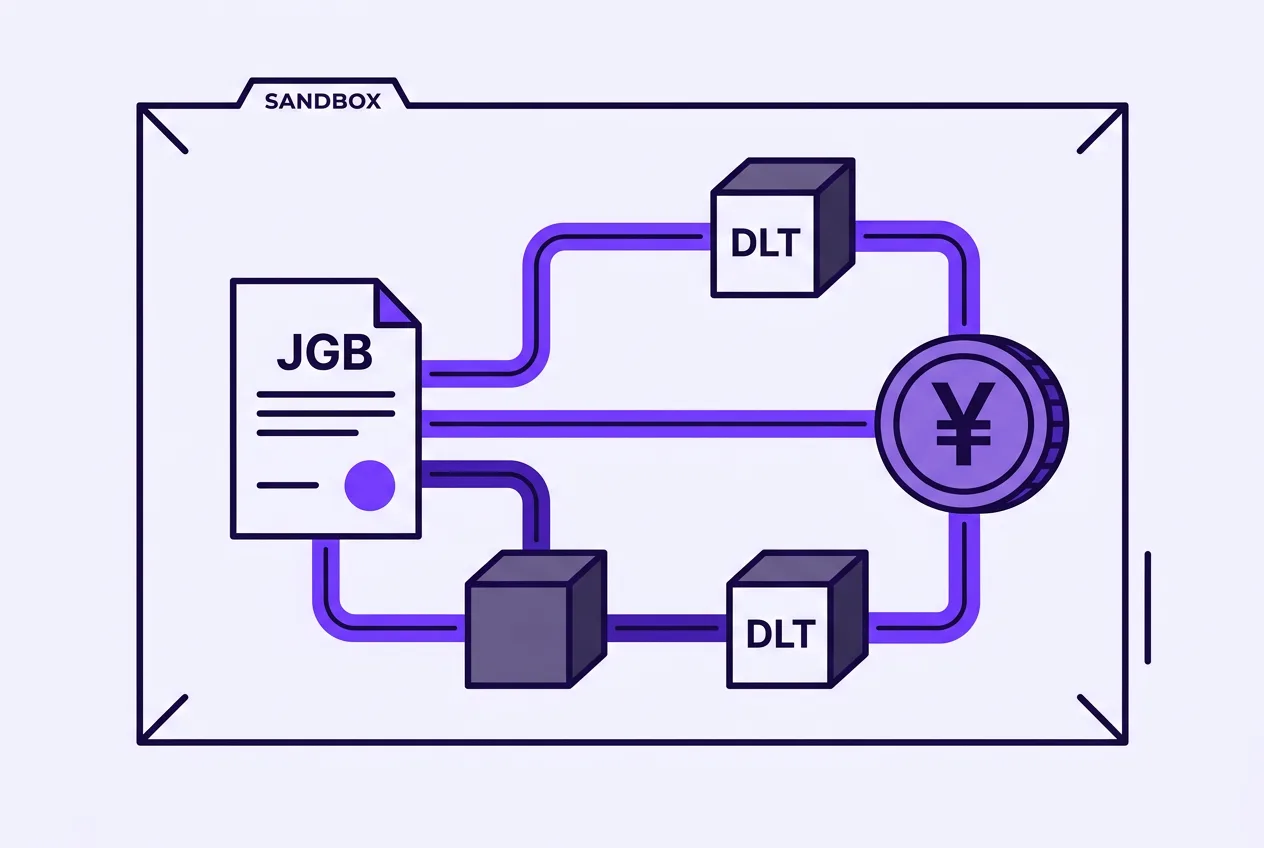
Japan updated its Payment Services Act in 2023 to permit licensed banks and trust companies to issue fully fiat-backed stablecoins. Several major banks have announced plans for yen-denominated pilots. These private-sector moves occur alongside the central bank’s technical experiments and international coordination efforts.
Kamiyama stressed that future work should focus on sound institutional setups, clear legal frameworks, public-private collaboration and security-by-design principles. The Bank of Japan intends to continue practical testing and dialogue rather than pursue wholesale replacement of existing systems.
Market and policy implications
The speech arrives as several jurisdictions advance stablecoin and tokenized-asset rules. South Korea’s draft framework, for example, sets bank-led issuance requirements, while Hong Kong has detailed licensing and reserve obligations for issuers. Kamiyama’s emphasis on interoperability and central bank anchors aligns with these efforts and with ongoing work at the European Central Bank on tokenized securities collateral.
Industry participants will watch how the BOJ’s sandbox results feed into policy. Clearer reserve and linking standards could reduce fragmentation risks for institutions holding both traditional deposits and new digital instruments. Cybersecurity expectations will likely rise for any platform connected to payment or settlement rails.
Frequently asked questions
What did the Bank of Japan executive say about stablecoins?
Kazushige Kamiyama called for stronger reserve backing, interoperability with central bank money and legal clarity to prevent market fragmentation and maintain financial stability.
Which BOJ projects address tokenized assets?
The DLT Sandbox Project tests tokenized central bank money for settlements and JGBs, while participation in BIS Project Agorá explores cross-border tokenized payments with private institutions.
How does AI factor into the stability concerns?
Agentic AI systems can discover and exploit vulnerabilities faster, and interconnected platforms raise the chance that a single cyber incident spreads rapidly across financial networks.
What legal changes has Japan already made for stablecoins?
The 2023 Payment Services Act amendment allows licensed banks and trust companies to issue fully fiat-backed stablecoins, opening the door for bank-led yen stablecoin pilots.
Comments
No comments yet. Be the first!