News DTCC
DTCC Tokenization Service Launches on Canton and Besu Networks with 20 Major Institutions
Key points
The Depository Trust Company launched its tokenization service on October 28, 2026, enabling 20 major institutions to convert eligible securities into tokens on Canton Network and a private Hyperledger Besu network.
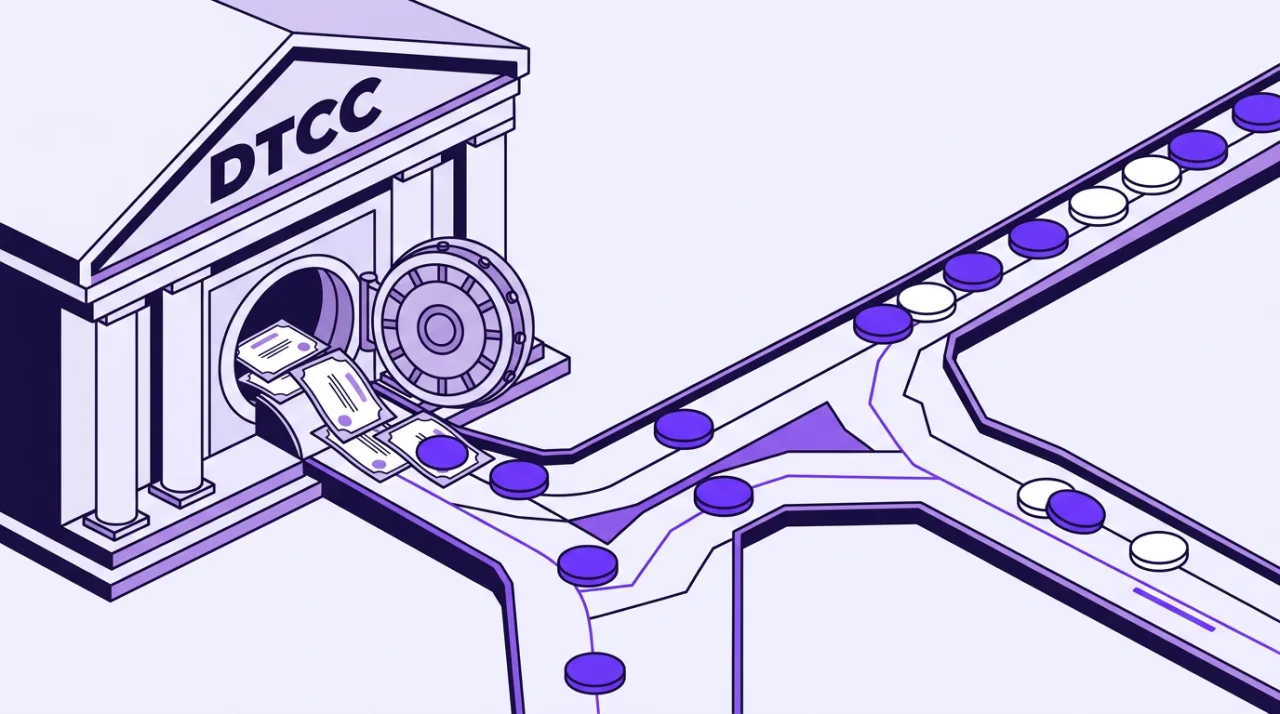
The Depository Trust Company, a subsidiary of DTCC, launched the DTCC Tokenization Service on October 28, 2026. The service operates on the Canton Network using the CIP-56 token standard and on DTCC’s private Hyperledger Besu network using the ERC-20 standard. It covers 25 to 34 securities, including select large-cap Russell 1000 equities, ETFs, and U.S. Treasuries, bills, notes, and bonds that represent roughly $30 trillion in assets under DTC custody.
Launch Details and Operational Features
Conversions between book-entry securities and tokens occur between 2 a.m. and 6 p.m. ET on business days, with a target completion time of 15 minutes or less. Once tokenized, the assets support 24/7 peer-to-peer transfers between DTC-registered wallets on the same network, subject to existing compliance controls. Each token maintains a one-to-one backing with the underlying DTC-held security, retains the original CUSIP identifier, and preserves full ownership rights, investor protections, and economic entitlements. DTC continues to serve as the official books and records keeper for all positions.
The service stems from a December 2025 SEC No-Action Letter that authorized a three-year pilot for Russell 1000 stocks, major ETFs, and U.S. Treasuries. Limited production trading began on July 15, 2026, involving more than 30 firms conducting conversions on both Canton and Besu. These early trades confirmed operational readiness before the full October 28 rollout. The design prioritizes liquidity improvements, faster collateral movement, and capital efficiency gains while maintaining regulatory continuity with traditional securities markets.
Additional networks, including Stellar with SEP-41 support and Circle’s Arc platform with ERC-20 tokens, remain scheduled for 2027. Token standards and settlement mechanics on those platforms will align with the same DTC custody and legal framework already in place.
Industry Participation and Background Context
Twenty DTC participants executed agreements ahead of launch. Signatories include Bank of America, Barclays, BNP Paribas, Citadel Securities, Citi, Fidelity Investments, J.P. Morgan, Morgan Stanley, State Street, UBS, Alpaca, Apex Clearing, Clear Street, DriveWealth, and Edward Jones. Additional firms will join on a rolling basis. The service incorporates feedback collected from more than 150 institutions through the DTC Digital Assets Solutions Industry Working Group.

DTCC President and CEO Frank La Salla described the launch as the culmination of years of preparatory work that extends established DTC standards into digital markets. Brian Steele, head of the digital assets initiative, noted the shift from experimentation to practical institutional adoption. The rollout follows earlier industry pilots that tested tokenized collateral and settlement concepts but lacked the scale and regulatory clarity now provided by the SEC letter.
Market participants expect the service to reduce friction in securities financing and margin processes. Because tokens remain fully fungible with their book-entry equivalents, firms can move positions between traditional and blockchain environments without altering legal ownership or settlement finality. This structure supports incremental adoption rather than requiring wholesale replacement of existing infrastructure.
Future Roadmap and Market Implications
Planned enhancements for 2027 include expanded eligible securities, broader corporate action processing on-chain, and integration of digital cash instruments for settlement. Technical upgrades will add single sign-on capabilities and maker-checker controls to meet institutional operational requirements. The indicative timeline remains subject to continued SEC authorization, participant demand, and iterative feedback from the working group.
By keeping DTC as the central registrar, the service avoids creating parallel ownership records that could complicate regulatory oversight. Institutions gain new options for collateral mobility and 24/7 transfer windows without losing the investor protections embedded in existing U.S. securities law. Over time, the addition of more networks and asset classes could further connect traditional market infrastructure with emerging blockchain-based platforms.
Frequently asked questions
Which networks support the DTCC tokenization service at launch?
The service operates on the Canton Network and DTCC’s private Hyperledger Besu network. Two additional networks are scheduled for 2027.
How many securities are initially eligible for tokenization?
Between 25 and 34 securities from the Russell 1000, selected ETFs, and U.S. Treasuries are eligible. These represent approximately $30 trillion in assets under DTC custody.
What institutions have signed on to the DTCC tokenization service?
Twenty DTC participants, including Bank of America, J.P. Morgan, Morgan Stanley, Fidelity, and State Street, executed agreements at launch. More firms will join on a rolling basis.
When can conversions between book-entry and tokenized securities occur?
Conversions are available from 2 a.m. to 6 p.m. ET on business days with a target completion time of 15 minutes or less.
Comments
No comments yet. Be the first!