News CPMI
CPMI Stablecoin Payment Systems Report Defines Four Central Bank Roles
Key points
The BIS Committee on Payments and Market Infrastructures published its report on 29 October 2026, identifying four central bank roles amid rising use of stablecoins and tokenised assets.
On 29 October 2026 the Bank for International Settlements Committee on Payments and Market Infrastructures released the report “The roles of central banks and central bank money in the evolving payment system.” The document examines how technological change, shifting user preferences, and new instruments including stablecoins are reshaping payment infrastructures worldwide.
Core Findings on Central Bank Money and Market Evolution
The report confirms that central bank money remains the safest and most liquid settlement asset for systemically important payment systems. It continues to serve as the anchor that supports convertibility at par across different forms of money. Private-sector participants drive innovation, competition, and broader access, yet they operate within frameworks where central bank money underpins final settlement.
Growing diversity in payment instruments and providers can raise efficiency and reach new users. At the same time, the report notes that new interdependencies may heighten credit, liquidity, operational, and cyber risks. Central banks are therefore encouraged to monitor these developments closely and to adapt their oversight and operational practices accordingly.
The analysis draws on earlier work, including the 2003 CPSS report on central bank money and the 2024 BIS-CPMI G20 tokenisation report. No binding global standards or fixed implementation dates are introduced; instead the paper offers a framework for jurisdictions to apply according to local conditions.
Four Distinct Roles for Central Banks
The CPMI identifies four complementary roles that central banks perform as payment systems evolve to accommodate stablecoins and tokenised deposits. In the issuer role, central banks decide which entities may hold accounts, what services are offered, and under what access conditions. This function directly influences the perimeter of central bank money and the terms on which private arrangements can settle.
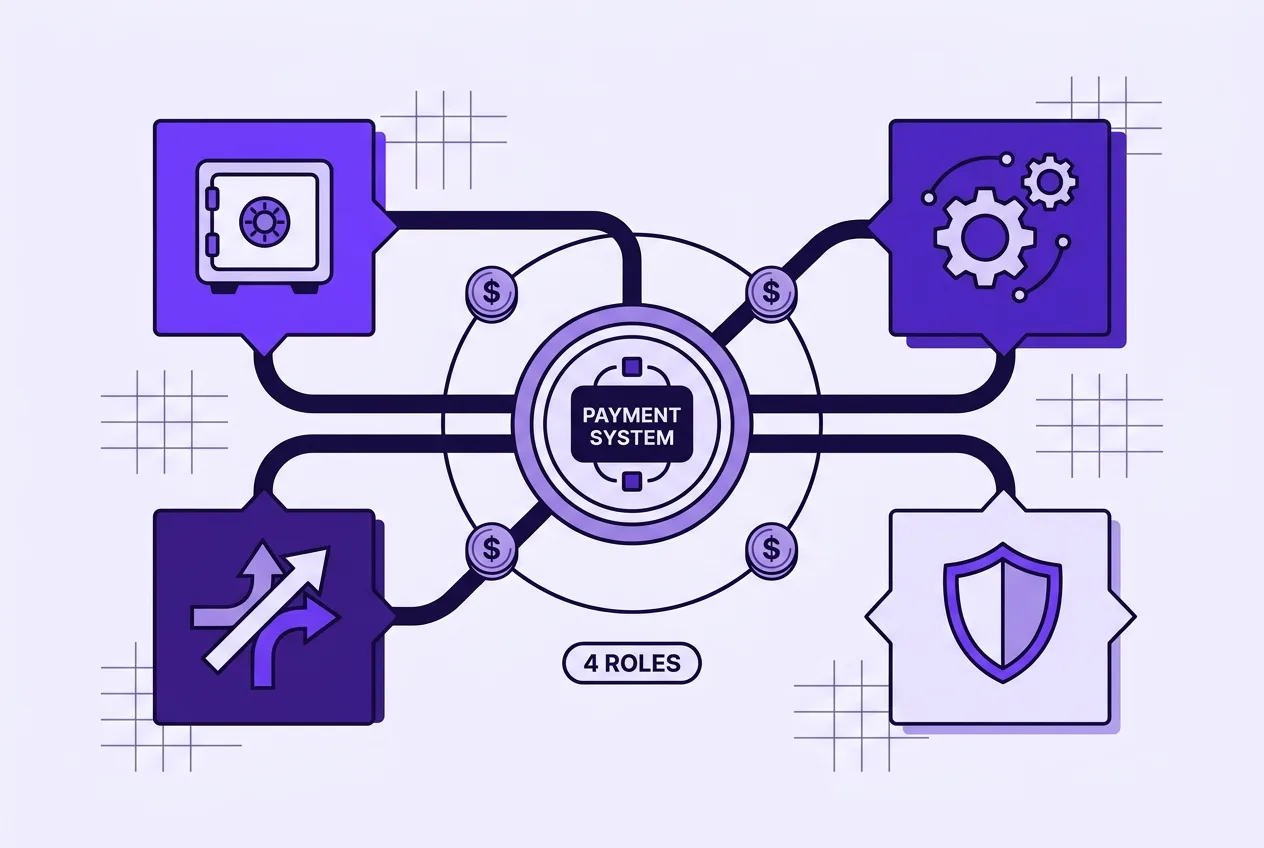
As operator, a central bank may upgrade existing infrastructure or develop new platforms that support programmable payments and fast settlement. Decisions in this area require careful weighing of resilience requirements against innovation goals and implementation costs. The overseer function involves assessing whether stablecoin arrangements or tokenised setups perform functions similar to traditional financial market infrastructures and whether they carry systemic importance. Governance standards and operational resilience are evaluated under this heading.
The catalyst role sees central banks convening stakeholders to resolve collective-action problems, encouraging common standards, and supporting market-led solutions where appropriate. Actions taken in one role can affect outcomes in the others, so the report advises a holistic policy approach and continued international cooperation to maintain consistent outcomes across borders.
Policy Considerations and Next Steps
Central banks are expected to maintain adaptability as payment landscapes shift. The report stresses that approaches may differ by jurisdiction yet benefit from shared analysis and dialogue. Sustained cooperation through bodies such as the CPMI helps align practices without imposing uniform rules.
Market participants, including stablecoin issuers and non-bank payment providers, can use the framework to anticipate supervisory expectations and design arrangements that integrate smoothly with central bank money. The absence of prescriptive timelines leaves room for individual central banks to calibrate their responses to domestic market structures and risk profiles.
Frequently asked questions
When was the CPMI report on central bank roles published?
The BIS Committee on Payments and Market Infrastructures released the report on 29 October 2026. It analyses how stablecoins and other innovations affect payment systems and central bank functions.
What are the four central bank roles identified by CPMI?
The roles are issuer, operator, overseer, and catalyst. Each describes a distinct set of responsibilities central banks hold when payment systems incorporate stablecoins and programmable platforms.
Does the CPMI report set new global rules for stablecoins?
No binding rules or implementation timelines are established. The document provides an analytical framework that individual jurisdictions may apply according to their own regulatory and market conditions.
How does the report address risks from diverse payment instruments?
It notes that greater diversity can improve efficiency yet may create new interdependencies and amplify credit, liquidity, operational, and cyber risks. Central banks are advised to monitor these developments through their existing oversight and operational roles.
Comments
No comments yet. Be the first!