News Ethereum
Ethereum Glamsterdam Upgrade Delayed Over Gas Changes Impacting Up to 15,000 Smart Contracts
Key points
Ethereum’s Glamsterdam upgrade, which includes EIP-8037 and EIP-8038, faces postponement after audits identified risks to deployed smart contracts from higher state gas costs.
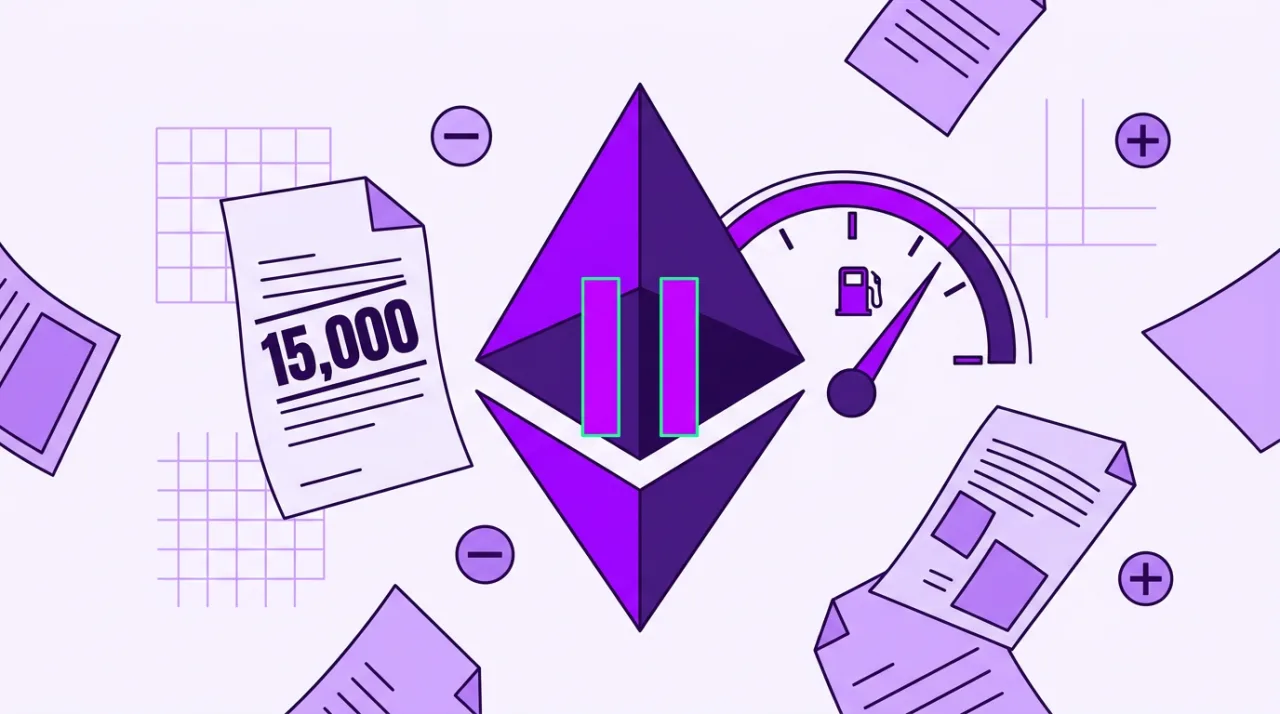
Ethereum developers postponed the Glamsterdam upgrade on 22 October 2026 after an audit revealed that proposed gas cost changes could break logic in thousands of deployed smart contracts. The decision followed the All Core Developers Execution (ACDE) call #248 and affects the planned Hoodi testnet fork originally scheduled for 26 October.
Ethereum Glamsterdam Upgrade Details and Gas Repricing
The upgrade combines changes from the Amsterdam execution-layer and Gloas consensus-layer proposals. It introduces EIP-8037, which adds a separate state-gas reservoir and sharply increases costs for new storage slots and account creation, and EIP-8038, which updates several state-access and write operations. These adjustments aim to support future block gas limits rising from roughly 60 million to 200 million while limiting state growth.
ChainSecurity’s October 2026 audit, later reviewed by Dedaub and Ethereum Foundation engineers, catalogued approximately 200 issue classes. Upper-bound estimates indicate between 10,000 and 15,000 of the roughly 90 million existing contracts on mainnet could be affected, primarily those relying on current gas invariants. Most risks stem from higher absolute costs rather than entirely new mechanics; a small number of immutable contracts may need redeployment.
Examples include storage slot creation costs rising from roughly 20,000 to 97,920 state gas units. Developers noted that the changes remain necessary for long-term scaling but require broader compatibility testing before activation.
Testnet Timeline and Developer Response
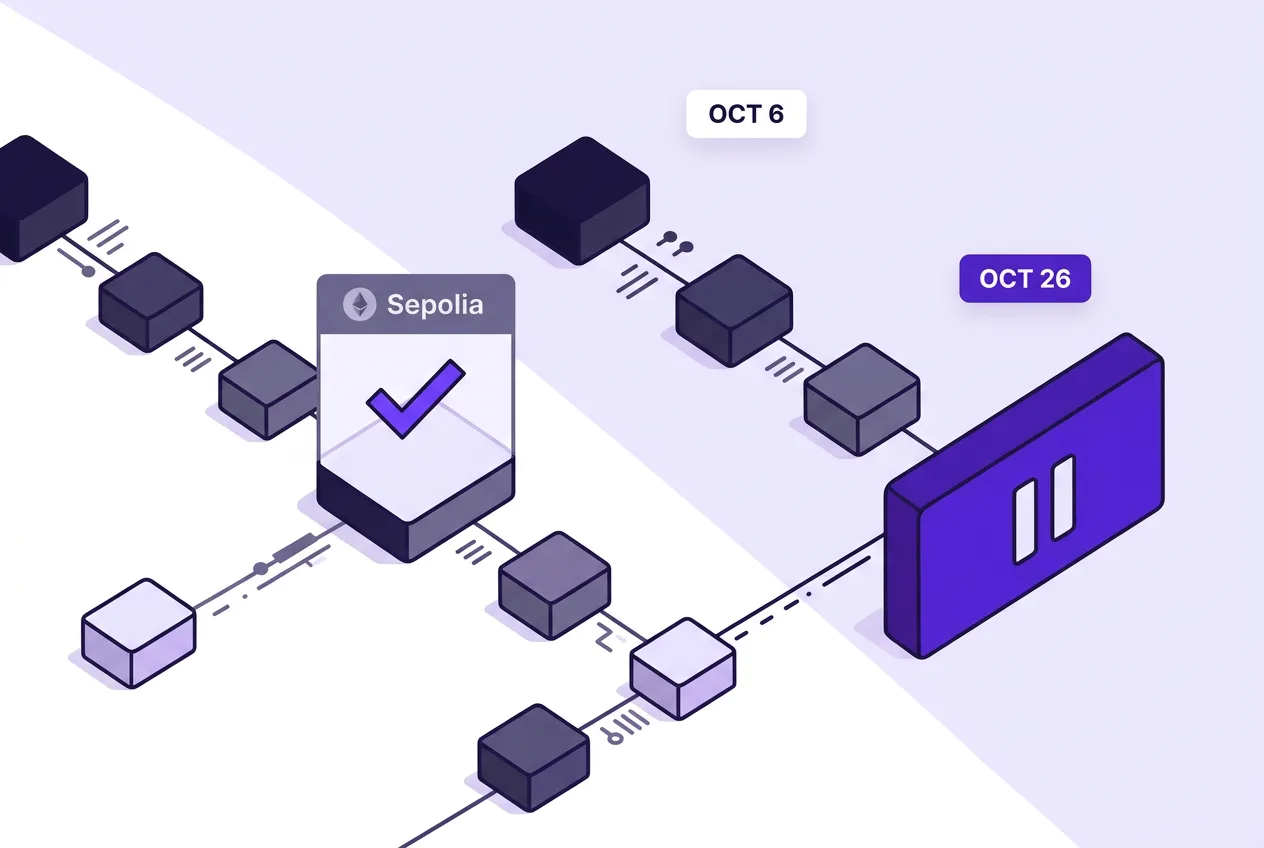
Sepolia activated Glamsterdam on 6 October 2026 at epoch 353,024. The Hoodi testnet fork, set for epoch 132,352 at 17:42:48 UTC on 26 October, was halted four days earlier after the audit findings surfaced. No revised Hoodi date has been announced, and mainnet carries no scheduled activation.
On 6 November, Ethereum Foundation developer Marius van der Wijden published a call for project teams and auditors to submit reports on affected contracts. Outreach continues, and the Foundation advised waiting for complete public audit results before any ACDE decision on specification changes or testnet rescheduling. Parallel work on the subsequent Hegota upgrade proceeds without interruption.
The next formal discussion is scheduled for the ACDE call on 19 November 2026. Participants will review prototype revisions or possible removal of EIP-8037 and EIP-8038. Any revised mainnet target, if the delay extends, points toward early 2027.
Market Context and User Impact
No action is required for ETH holders or current mainnet users. The repricing affects only future execution rules and does not alter existing chain state. Short-term price volatility occurred in early November, with reports noting an approximate 6 percent dip linked to the news, yet the episode concerns upgrade compatibility rather than immediate network operations.
Developers continue to stress that the gas adjustments remain essential for raising throughput limits without uncontrolled state expansion. Further audit publications and community feedback will determine whether the EIPs are modified, delayed, or replaced before any future testnet or mainnet deployment.
Frequently asked questions
What caused the Glamsterdam upgrade postponement?
A ChainSecurity audit completed in October 2026 identified gas-cost changes in EIP-8037 and EIP-8038 that could break assumptions in up to 15,000 deployed contracts. The ACDE call on 22 October therefore halted the planned Hoodi testnet fork.
Which contracts are most likely to be affected?
Contracts that rely on fixed gas costs for storage slot creation or account creation face the highest risk. Estimates place the affected set between 10,000 and 15,000 out of roughly 90 million total contracts, representing a fringe subset.
When will the next decision on Glamsterdam occur?
The ACDE call scheduled for 19 November 2026 will review new audit findings, possible specification revisions, or removal of the two gas EIPs. No date has been set for a revised Hoodi testnet fork.
Do Ethereum users need to take any action now?
No changes to holdings or wallet activity are required. The upgrade affects future execution rules only and leaves the current chain state unchanged.
Comments
No comments yet. Be the first!