News ECB
ECB digital euro network providers selected for DESP connectivity
Key points
The ECB has named two temporary groupings of network service providers to handle connectivity for the digital euro service platform under contracts that run up to 10 years.
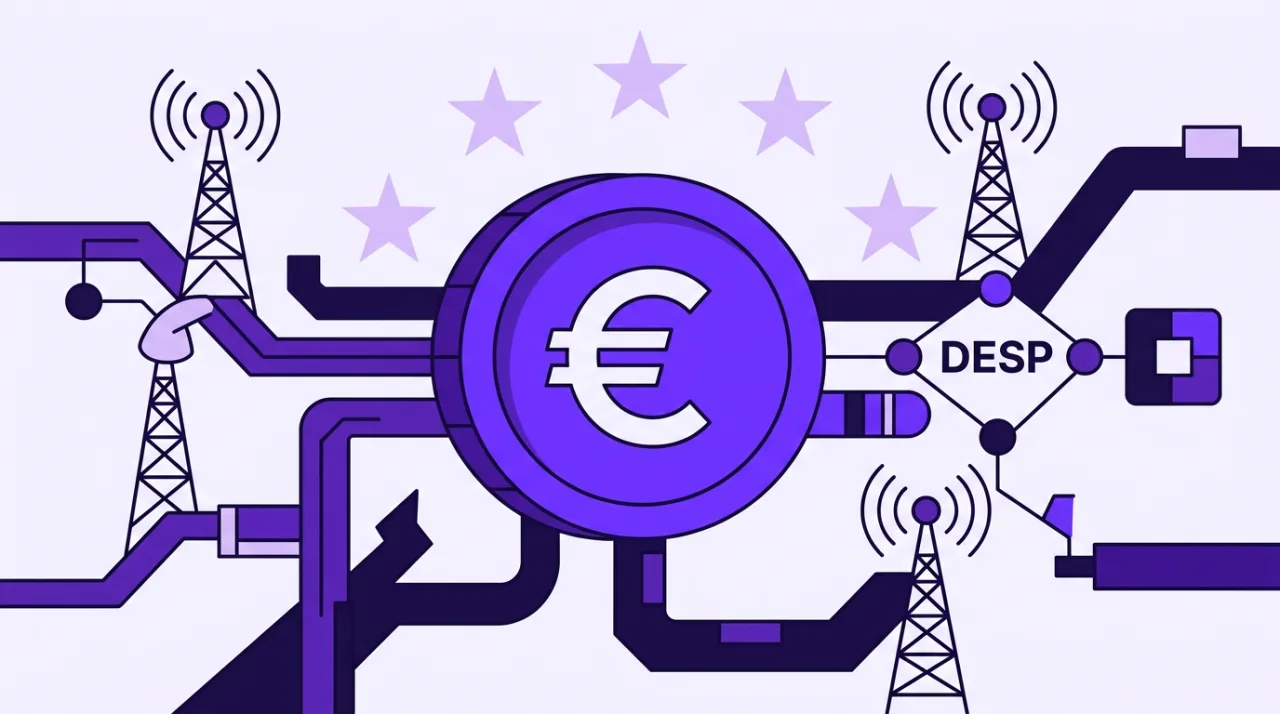
On 30 October 2026 the European Central Bank announced the selection of two consortia to provide network connectivity to the digital euro service platform. The award follows a call for applications issued on 27 August 2025 and a subsequent tender process. The contracts secure resilient links between payment service providers, national central banks and the platform components.
Contract awards and implementation timeline
The first-ranked consortium, formed by Nexi Payments S.p.A. and Deutsche Telekom Business Solutions GmbH, saw its contract enter into force on 28 September 2026 for a 10-year term. This grouping will initially support the digital euro pilot phase. The second-ranked consortium, comprising Telefónica de España S.A.U., Telefónica Global Solutions S.L.U. and Indra Soluciones Tecnologías de la Información S.L.U., will begin operations in May 2027.
Both providers will supply connectivity that links participating payment service providers and euro-area national central banks to the digital euro service platform. They will also enable communication between the platform’s internal components. Payment service providers retain the option to choose either network service provider for their connections.
The agreements incorporate flexibility clauses that allow adjustments if technical requirements evolve. Both consortia must reach operational readiness by 2029 to support potential full issuance, pending a future decision by the ECB Governing Council.
Project background and resilience objectives
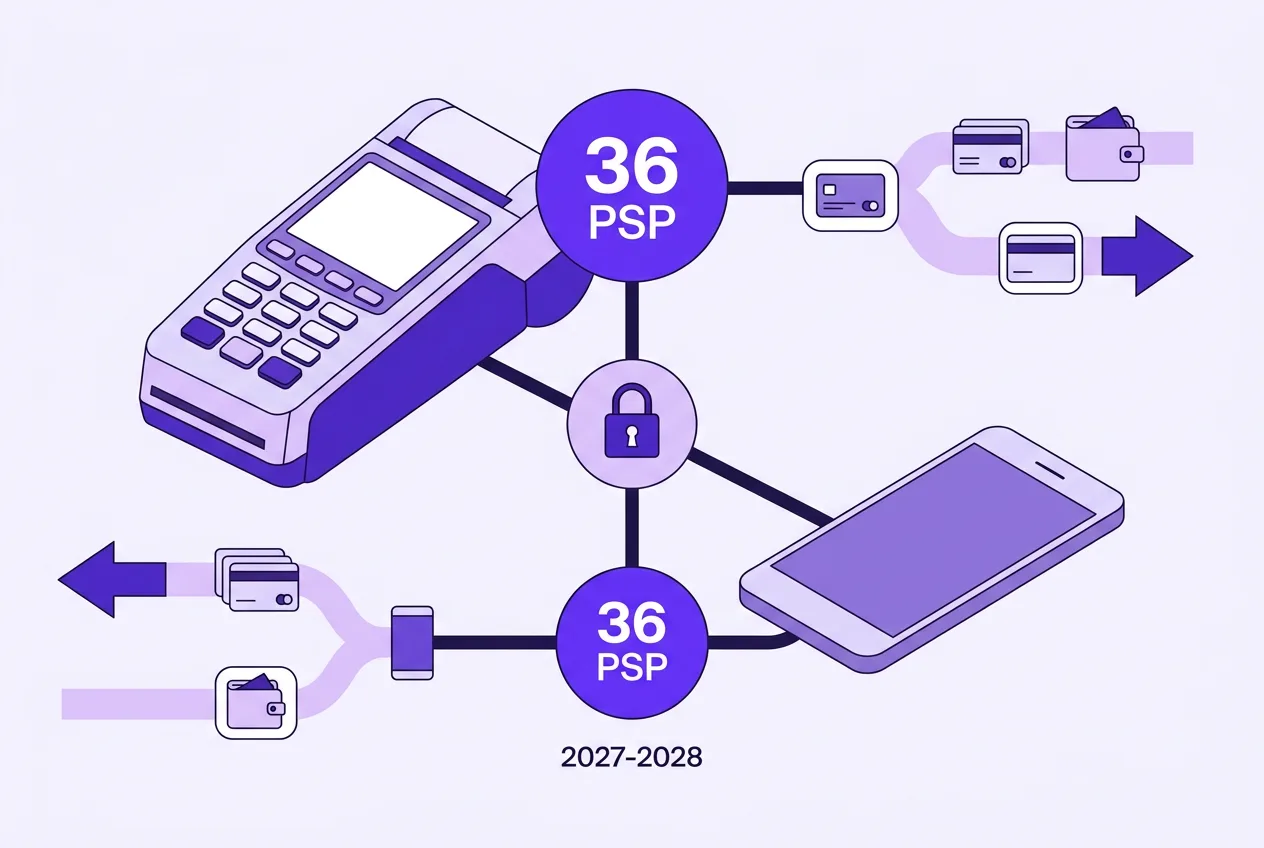
The network provider selection follows the July 2026 award of pilot participation to 36 payment service providers chosen from more than 50 applicants. Those institutions will conduct a 12-month beta pilot beginning in the second half of 2027 at the ECB and 19 euro-area national central banks, excluding Bulgaria and Malta. Earlier tenders in 2025 covered additional digital euro service platform elements including fraud and risk management, alias lookup services and offline solutions.
The dual-provider model is designed to deliver operational resilience and eliminate dependence on a single network operator. The digital euro itself is intended to complement, rather than replace, physical cash while reducing reliance on non-European payment networks for retail transactions.
Payment service providers will connect through the chosen network service providers to access core platform functions. National central banks will use the same channels for settlement and oversight tasks. This architecture supports both online and offline payment flows once the pilot expands.
Next steps toward 2027–2028 testing
Pilot testing of beta digital euro functionality will focus on user experience, transaction processes and both online and offline person-to-person and merchant payments during 2027 and 2028. Any decision to proceed to issuance requires adoption of the Digital Euro Regulation by the European Parliament and Council as well as formal approval by the ECB Governing Council.
Preparations continue in parallel on other platform components already awarded. The phased approach allows the ECB to validate technical and operational requirements before committing to wider deployment.
Frequently asked questions
Which consortia were selected as network service providers?
The ECB selected two temporary groupings: Nexi Payments with Deutsche Telekom Business Solutions, and Telefónica de España with Telefónica Global Solutions and Indra.
When do the network contracts begin and how long do they last?
The first contract started on 28 September 2026 for a 10-year term; the second consortium begins work in May 2027.
What role will the network providers play in the digital euro pilot?
They will connect payment service providers and national central banks to the digital euro service platform and enable internal platform communications.
When must the providers be ready for potential full issuance?
Both consortia are required to reach operational readiness by 2029, subject to a later Governing Council decision.
Comments 1