News E-CNY
e-CNY Infrastructure Enhancements Roll Out With DCEPS and SMART Contracts
Key points
The PBOC announced DCEPS and the SMART contract framework at the October 2026 e-CNY conference, expanding the digital yuan's technical base and use cases.

The People’s Bank of China announced upgrades to the e-CNY system on October 21, 2026, at the e-CNY Annual Conference held during the Financial Street Forum in Beijing. The Digital RMB Operation Management Center introduced the Digital Currency & Electronic Payment System and the SMART contract service framework to support expanded issuance, payments, and conditional execution functions.
Core Components of the DCEPS Platform
DCEPS operates as a 24/7 central-bank platform that combines issuance management, retail and wholesale payments, blockchain functions, cross-border support, smart contracts, liquidity and wallet management, data services, and risk controls. It forms the technical foundation for the Cross-border e-CNY Transfer Services platform and allows institutions to connect through a single access point, which reduces integration and liquidity costs for the 30 authorized operating institutions and 121 system participants already active.
The SMART framework, defined as Standardized, Machine-enforced, Accessible, Rule-based, and Trustworthy, provides a shared ledger for multi-party smart contracts. These contracts support automated conditional payments across on-chain and off-chain environments as well as online and offline channels. Live applications include prepaid fund management, supply chain finance, fiscal subsidies, consumption vouchers, and migrant worker wage payments, with further expansion planned.
Context From e-CNY Transition and Current Scale
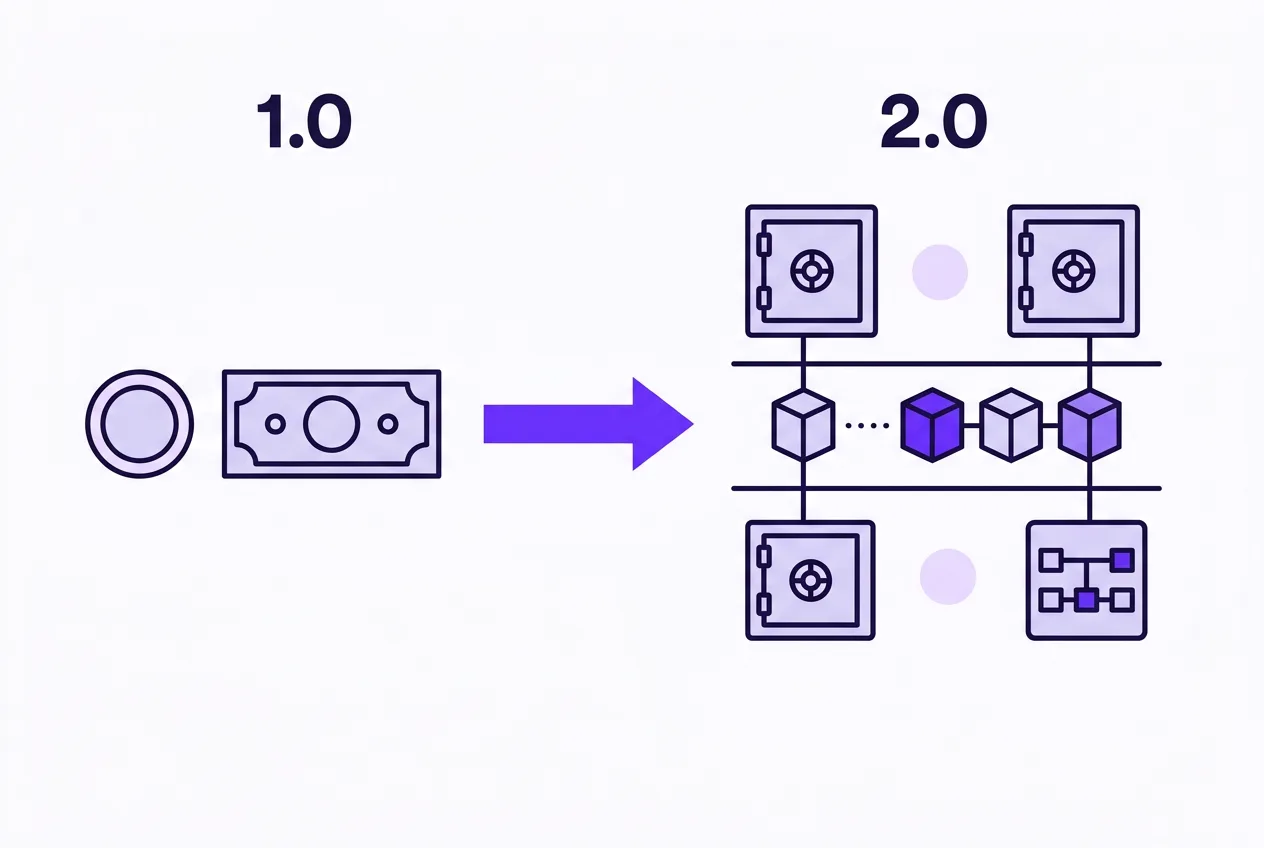
The infrastructure builds on the January 1, 2026, shift of e-CNY from a cash-like 1.0 model to a deposit-money 2.0 model. Under the updated dual-layer framework, eligible real-name wallet balances held at commercial banks now function as interest-bearing deposits classified as M1. This change addressed earlier concerns from banks and aligned incentives across the operator network.
By the end of September 2026, the pilot had recorded approximately 4.3 billion cumulative transactions with a total value of 31 trillion yuan. September alone accounted for 99.67 million transactions worth 1.87 trillion yuan, representing year-on-year increases of 12 percent in volume and 123 percent in value. PBOC Deputy Governor Lu Lei stated that the upgrades support hybrid account-based development and a comprehensive central-bank payment and settlement platform while promoting standardized, open collaboration.
Next Steps for Integration and Cross-Border Use
The PBOC plans to help commercial banks incorporate e-CNY into deposits, loans, remittances, and investments. It will also encourage additional licensed institutions to participate in an orderly manner and will expand SMART contract applications along with cross-border capabilities through CBETS. The measures aim to maintain the existing dual-layer operational structure while increasing the reach of programmable payments.
Frequently asked questions
What is the DCEPS platform in the e-CNY system?
DCEPS is the 24/7 central-bank platform released in October 2026 that integrates issuance, payments, blockchain functions, cross-border support, smart contracts, and risk controls for the digital yuan.
How does the SMART contract framework work for e-CNY?
The SMART framework enables standardized, rule-based smart contracts on a shared ledger that execute automatically when conditions are met, supporting both on-chain and off-chain scenarios.
What was the transaction volume of e-CNY by September 2026?
Cumulative transactions reached 4.3 billion worth 31 trillion yuan by end-September 2026, with September recording 99.67 million transactions valued at 1.87 trillion yuan.
When did e-CNY move to the deposit-money 2.0 model?
The transition to the deposit-money 2.0 model took place on January 1, 2026, allowing eligible real-name wallet balances to earn interest as M1 deposits.
Comments 2