News ECB
Digital Euro Connectivity Standards Advance as ECB Selects DESP Network Providers
Key points
The ECB has selected two consortia to provide network connectivity for the Digital Euro Service Platform following a 2025 tender process.
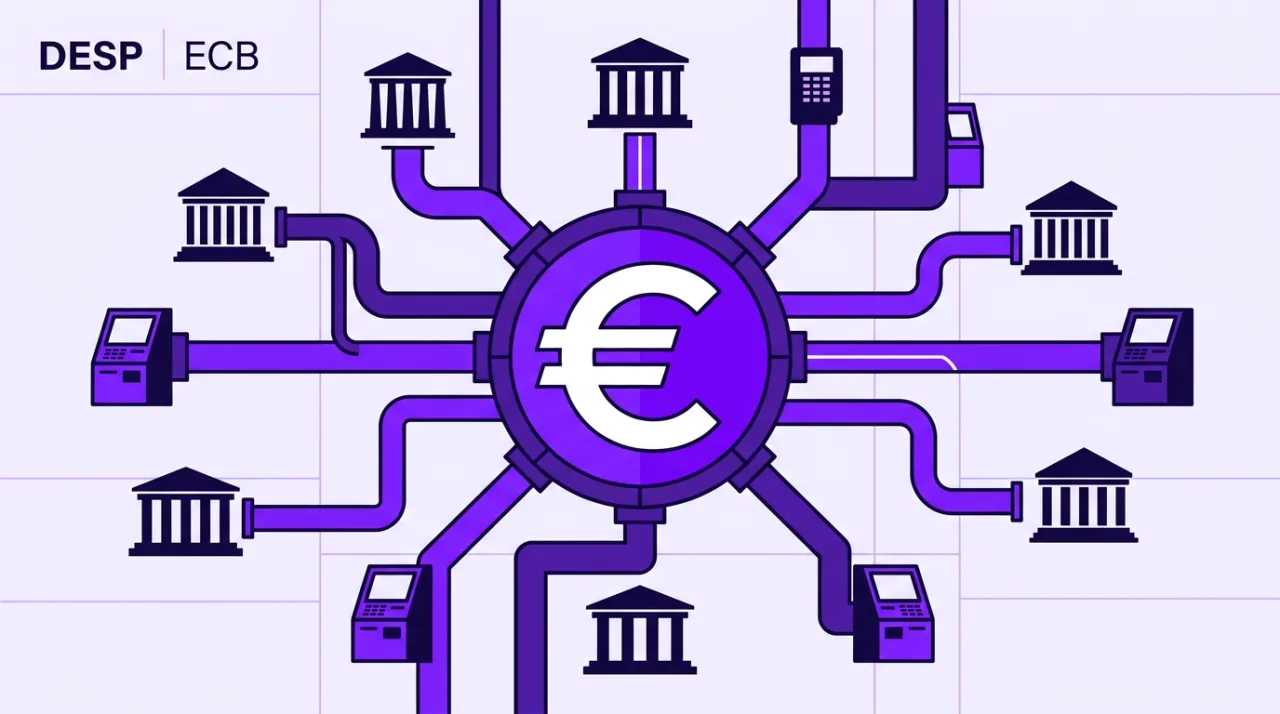
On 30 October 2026 the European Central Bank announced the selection of two temporary groupings of network service providers to deliver connectivity services for the Digital Euro Service Platform. The move follows a call for applications issued on 27 August 2025 and completes a formal tender procedure.
The first-ranked consortium, Nexi Payments and Deutsche Telekom Business Solutions, signed its contract on 28 September 2026. The second-ranked group, formed by Telefónica de España, Telefónica Global Solutions and Indra Soluciones Tecnologías de la Información, will enter into force in May 2027. Both agreements run for ten years and include provisions for adjustments during the pilot and subsequent phases.
Scope of DESP Connectivity Contracts
The selected providers will connect payment service providers and national central banks to the central technical platform that handles issuance, redemption and settlement of the digital euro. All authorised PSPs offering digital euro services may choose either network operator. The contracts require both consortia to be operationally ready from 2029 onward, subject to a final decision by the ECB Governing Council on issuance.
The DESP itself operates as a centralised settlement system using JSON RESTful APIs aligned with the ISO 20022 messaging standard. It does not rely on distributed ledger technology. Connectivity services cover both the pilot phase and any later production environment, allowing participating institutions to switch providers if required.
Payment service providers and national central banks will integrate through these networks during the ongoing development phase that began in the third quarter of 2026. The agreements explicitly permit scaling of capacity and technical specifications as legislative negotiations progress.
Background on Digital Euro Pilot and Legislation
A 12-month pilot of the digital euro is scheduled to begin in the second half of 2027. It will involve 36 selected payment service providers, Eurosystem staff and merchants across the 19 national central banks of the euro area. Test cases will cover person-to-person and person-to-business payments in both online and offline environments.
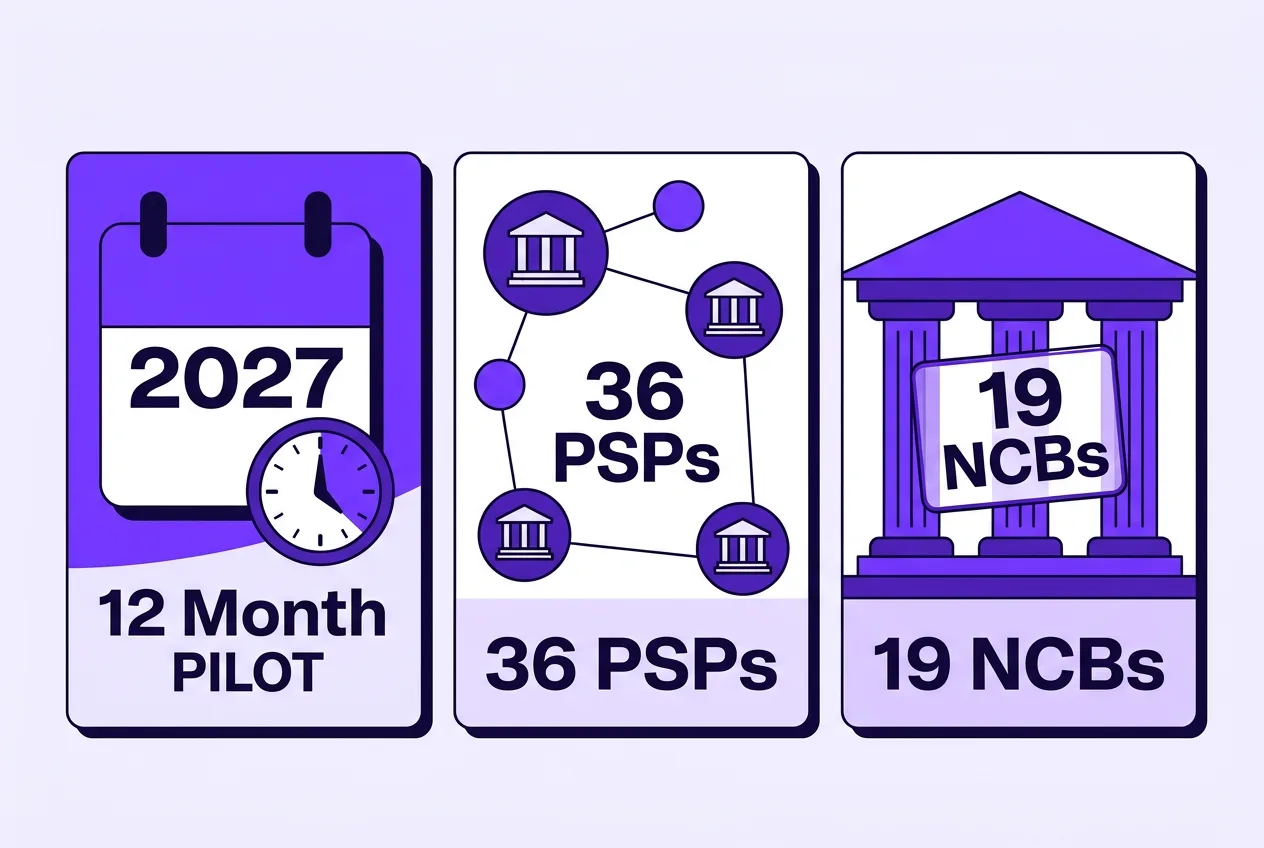
Trilogue negotiations between the European Commission, Council and Parliament continue. The ECB has stated it aims to complete technical preparations so that issuance could begin in 2029 provided the necessary regulation is adopted by the end of 2026. No final decision on issuance has been taken.
The current procurement builds on earlier work published in July 2026 that outlined the pilot structure and participant selection criteria. Parallel technical and procurement activities remain under way while the legislative process runs its course.
Frequently asked questions
Which consortia were chosen for DESP connectivity?
The ECB selected Nexi Payments with Deutsche Telekom and a second group consisting of Telefónica entities together with Indra. The first contract started in September 2026; the second begins in May 2027.
When will the digital euro pilot start?
The pilot phase is planned for the second half of 2027 and will last twelve months, involving 36 payment service providers across the euro area.
What is the earliest possible issuance date for a digital euro?
The ECB targets technical readiness for 2029, conditional on adoption of enabling legislation by the end of 2026.
Do the new contracts involve blockchain technology?
No. The DESP uses centralised settlement with JSON RESTful APIs aligned to ISO 20022 standards.
Comments
No comments yet. Be the first!