News Ethereum
Ethereum quantum resistance 2028 target announced by Justin Drake at Devcon 8
Key points
Justin Drake outlined a December 2028 aspiration for Ethereum’s full post-quantum and post-AI upgrade at Devcon 8 in Mumbai on November 3, 2026.
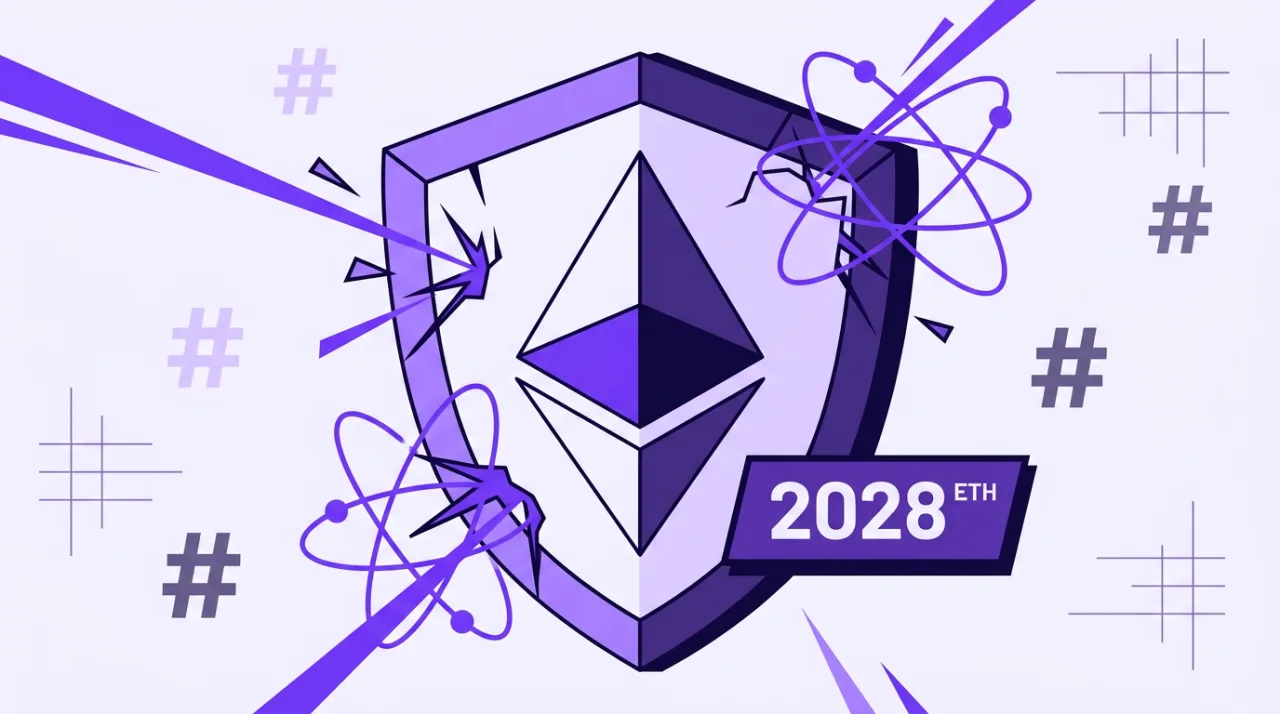
Ethereum Foundation researcher Justin Drake announced at Devcon 8 in Mumbai on November 3, 2026, an aspiration to complete the network’s full post-quantum and post-AI transition by December 2028. The target covers validator signatures, data availability, and account authentication layers. It is presented as a hope rather than a formal commitment and remains separate from the existing protocol roadmap.
Ethereum quantum resistance 2028 plan covers signatures, data and accounts
Drake described a two-year window after an early-2027 milestone to ship three additional network forks. The scope includes replacing BLS signatures with hash-based schemes such as leanSPHINCS and leanXMSS at the consensus layer. The execution layer would adopt new account authentication methods, while the data layer would secure availability sampling against quantum attacks. A powerful quantum computer could derive private keys from exposed public keys, creating theft risks that these changes aim to close.
Post-AI concerns also factor into the timeline. Drake noted in October 2026 that advances in artificial intelligence could compromise elliptic-curve cryptography before large-scale quantum hardware arrives. Technical work centers on leanVM, a minimal zkVM that compresses larger hash-based signatures by roughly 250 times while preserving verification speed. The project recently completed end-to-end formal verification. Related efforts include leanSpec and the $1 million Poseidon Prize for hash-based primitives, drawing on NIST post-quantum standards published in 2024.
Comparison with official 2029 roadmap and January 2027 review
The Ethereum Foundation’s Protocol Cluster plan from September 7, 2026, sets a December 2029 self-imposed deadline for quantum resistance across execution, consensus, and data layers. Drake’s 2028 goal is broader because it incorporates post-AI elements and arrives one year earlier. The 2029 date stays in force until at least a January 2027 reassessment with external experts. A dedicated Post-Quantum Security team formed in January 2026 continues parallel development of staged forks labeled I* and J* milestones.
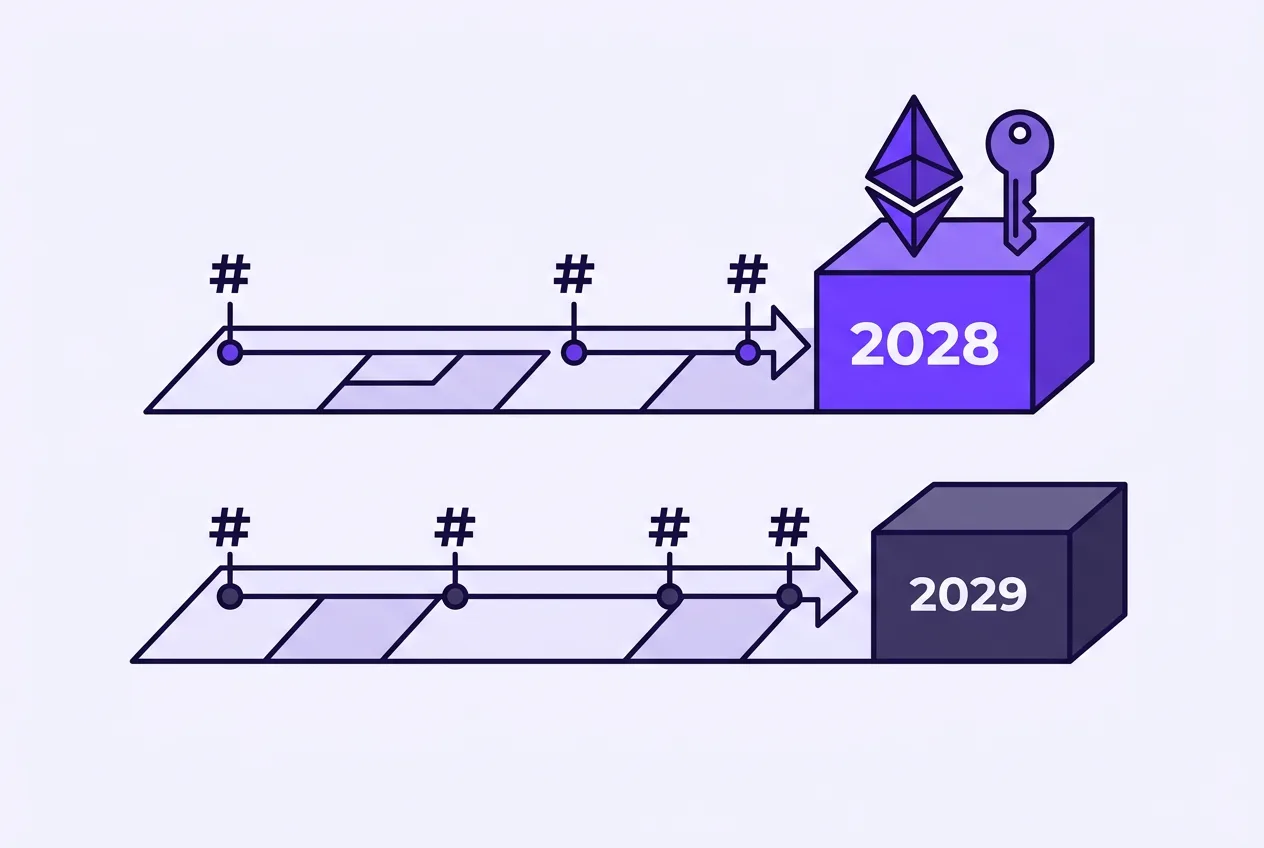
Drake’s personal Q-Day estimates have moved forward, with the earliest credible threat now placed around 2028 and a median expectation near 2032. Full migration of user wallets remains a longer process outside the immediate fork sequence. Client interoperability testing, leanVM and leanXMSS implementation, and further Devcon discussions are scheduled through the end of 2026. The All Core Devs calls will determine whether post-quantum work receives higher priority in the coming months.
Next steps after Devcon 8 announcement
The January 2027 roadmap review will incorporate feedback from the Mumbai sessions and external cryptographers. Ongoing work on leanSpec and formal verification tools continues in parallel. Any acceleration would depend on client readiness and the outcome of interop tests rather than a fixed calendar. The Ethereum Foundation has not altered its published 2029 target pending that reassessment.
Frequently asked questions
What is the December 2028 target Justin Drake announced?
Drake stated an aspiration to finish Ethereum’s full post-quantum and post-AI transition by December 2028, covering signatures, data availability, and account authentication.
How does the 2028 goal differ from the official Ethereum roadmap?
The September 2026 protocol plan lists December 2029 for quantum resistance. Drake’s target is one year earlier, includes post-AI elements, and is described as a hope rather than a binding deadline.
Which technical components are under development?
Work focuses on leanSPHINCS and leanXMSS for signatures, leanVM for signature compression, and formal verification of these primitives ahead of the January 2027 review.
When will the next roadmap assessment occur?
A reassessment with external experts is scheduled for January 2027 to decide whether post-quantum work receives higher priority in All Core Devs calls.
Comments
No comments yet. Be the first!