News Tokenization
Schroders Tokenized Fund Launches Emerging Markets Bond Strategy on Solana
Key points
Schroders has introduced a tokenized share class of its emerging markets bond fund on Solana through Centrifuge, marking the asset manager's first deployment on the blockchain.
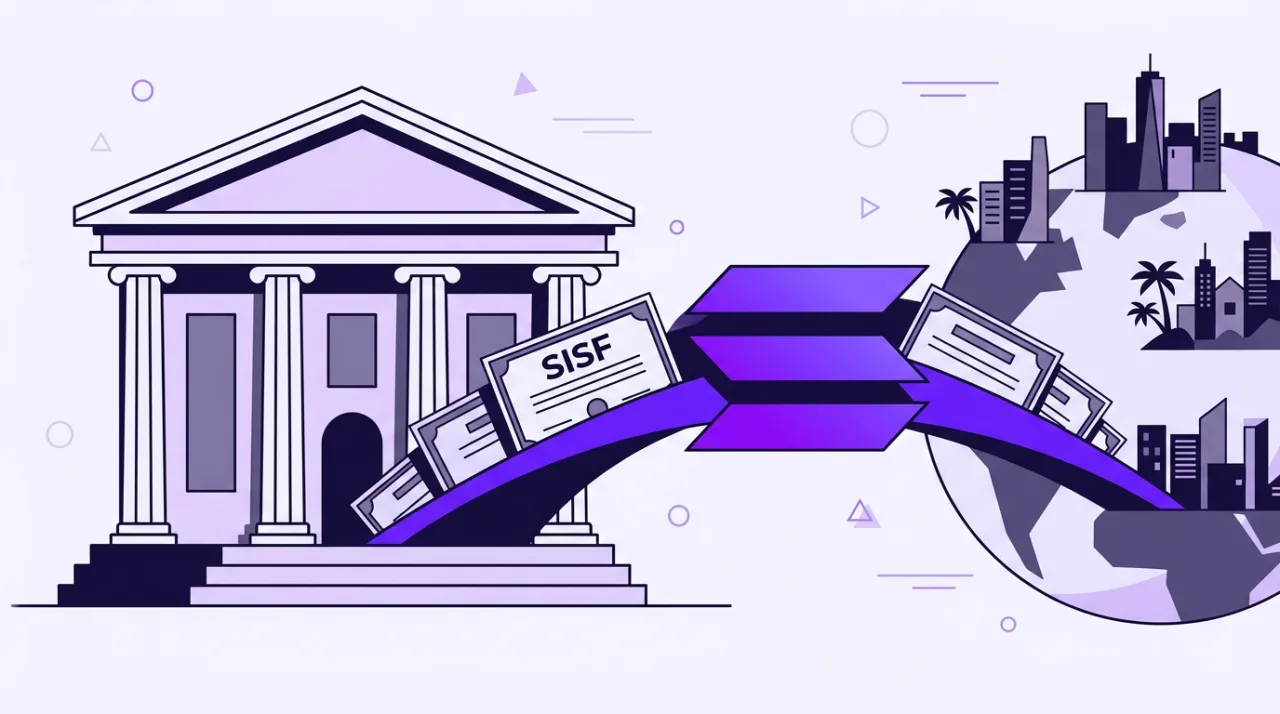
Schroders launched a tokenized version of its Schroder International Selection Fund Emerging Market Bond strategy on Solana on November 4, 2026, through the Centrifuge platform. The structure uses a feeder fund domiciled in the British Virgin Islands that holds tokenized shares investors can buy and redeem in USDC. The feeder invests in Schroders' underlying Luxembourg UCITS fund focused on sovereign, corporate, and local-currency emerging markets debt.
Launch details and operational terms
The tokenized feeder trades under the ticker SISF and carries a $100,000 minimum investment open to professional investors outside the United States. Subscriptions settle on a T+1 basis while redemptions follow a T+3 schedule. The net asset value sits near $1.00, and the vehicle began with roughly $200,000 in assets and two holders. Fees at the feeder level stand at zero, though investors pay the underlying fund's costs of approximately 1.29 percent annually.
Centrifuge manages issuance and ongoing operations on Solana, one of several settlement layers the protocol supports. The platform already holds more than $750 million in tokenized assets across its deployments and contributes to over $4 billion in real-world asset value recorded on Solana. Daily USDC liquidity replaces traditional settlement cycles for this share class.
Schroders manages approximately $1.1 trillion in assets as of June 2026 and maintains more than 50 years of experience in emerging markets debt with over 40 dedicated specialists. The new vehicle follows the firm's August 2026 Irish regulatory approval for a tokenized USD money-market fund share class called SOAR.
Context within institutional tokenization and prior moves
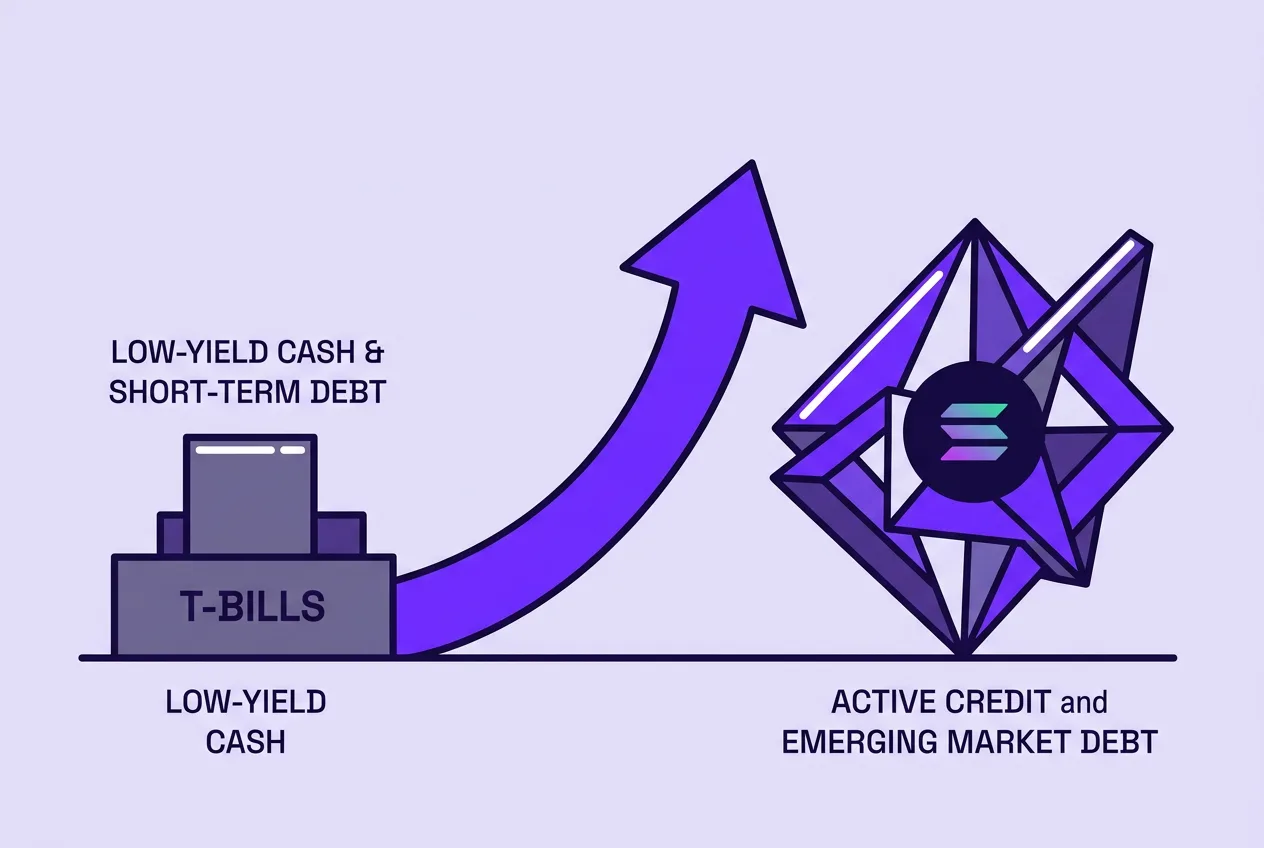
This deployment extends institutional tokenization from short-duration instruments such as Treasuries and money-market funds into actively managed credit strategies. Centrifuge has previously facilitated tokenized high-yield bond offerings from New York Life, while Janus Henderson has issued a Nasdaq-100 product on Stellar. Solana's infrastructure supports the transaction volume and settlement speed required for daily subscriptions and redemptions.
Schroders portfolio managers noted that on-chain accessibility allows the firm's emerging markets expertise to reach a wider set of qualified investors without altering the underlying investment process. The feeder structure keeps regulatory oversight intact through the Luxembourg UCITS framework while adding blockchain settlement via the BVI vehicle.
Market participants have tracked similar pilots across Europe and Asia, where asset managers test tokenized share classes under existing fund regulations. The Schroders move adds data on operational costs, investor onboarding, and secondary-market potential for longer-duration credit products. Early assets under management remain modest, and further scale will depend on demonstrated liquidity and integration with broader institutional systems.
Next developments and regulatory backdrop
Broader questions remain around collateral reuse, multi-chain expansion, and eventual secondary-market trading for the SISF shares. Centrifuge has stated that Solana serves as the initial settlement layer, leaving room for additional blockchains in future iterations. No immediate follow-on product launches have been announced by Schroders.
Regulators in multiple jurisdictions continue to review how tokenized funds fit within existing securities frameworks. The European Union's Markets in Crypto-Assets regulation and parallel U.S. guidance on digital asset custody will shape the pace of further rollouts. Asset managers monitor these developments while building operational experience with platforms such as Centrifuge.
Investors evaluating the vehicle receive daily NAV updates and USDC settlement, features that reduce traditional friction in emerging markets bond access. The structure preserves Schroders' active management approach while recording ownership on a public ledger.
Frequently asked questions
What is the minimum investment for the Schroders tokenized fund?
The feeder fund requires a $100,000 minimum for professional investors outside the United States. Subscriptions occur in USDC with T+1 settlement.
Which blockchain hosts the Schroders tokenized shares?
The shares operate on Solana through the Centrifuge protocol, which handles issuance and management for the feeder fund.
How does the tokenized feeder relate to the original EM bond fund?
The tokenized vehicle functions as a feeder that invests directly into Schroders' existing Luxembourg UCITS emerging markets bond strategy, preserving the same underlying holdings and management.
What fees apply at the tokenized feeder level?
Management and performance fees stand at zero at the feeder level. Investors pay only the underlying fund's annual costs of roughly 1.29 percent.
Comments 1