News Regulation
South Korea Stablecoin Draft Sets Bank-Led Issuance Rules and Ends ICO Ban
Key points
South Korea’s FSC released draft rules on November 24 requiring bank-majority ownership for won stablecoins and white-paper disclosure for ICOs.
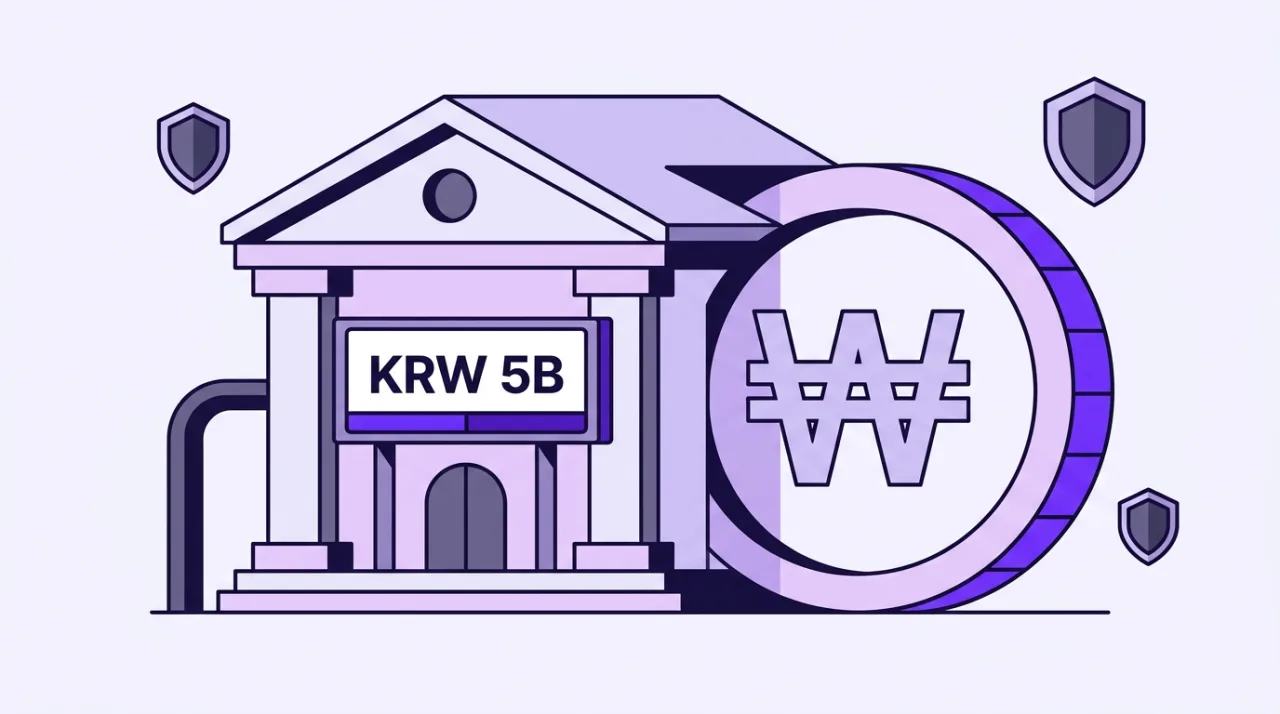
On November 24, 2026, South Korea’s Financial Services Commission published a draft bill titled the Act on Innovation in the Digital Asset Industry and User Protection. The document defines stablecoins as digital payment tokens pegged to a single currency and outlines authorization, reserve and redemption requirements for domestic issuers.
South Korea Stablecoin Draft Details Capital, Ownership and Reserve Rules
Domestic issuers of won-denominated stablecoins must secure FSC authorization. They need minimum equity capital of KRW 5 billion, a feasible business plan, qualified personnel and facilities, and eligible major shareholders and executives. Issuance is limited in the first stage to consortiums where banks hold more than 50 percent ownership, though fintech or technology firms may hold the single largest individual stake.
Issuers must submit an issuance plan covering volume limits, reserve management and redemption procedures. They are required to maintain 100 percent reserves in highly liquid assets such as deposits or government bonds in the pegged currency. These reserves must be held at a custodian bank or in trust, protected from seizure, and redeemed at par value on demand without payment of interest to holders.
Stablecoins reaching an issuance balance of KRW 1 trillion or more may be designated systemic, triggering stricter capital and liquidity standards and possible joint examinations by the Bank of Korea. Foreign issuers such as Tether may operate in South Korea if they meet overseas supervision standards, open a Korean branch with adequate funds, register with the FSC and report their tokens.
White-Paper Requirements Lift Nine-Year ICO Ban
The draft ends the domestic ICO prohibition that has been in place since 2017. Issuers may now offer tokens to unspecified buyers once they file a digital asset white paper with the FSC. The document must detail the issuer, use of funds, issuance volume, project description and risks, and must be accepted and publicly disclosed after a deliberation and cooling-off period.

The FSC may require corrections for material omissions. Crypto exchanges face a 20 percent cap on major shareholder stakes, with a possible increase to 34 percent upon approval, and existing platforms receive a three-year grace period after designation. The framework segments the industry into licensed categories for trading, brokerage, custody and investment management under a same-activity, same-risk principle.
Legislative Path and Market Context
The bill is expected to be introduced to the National Assembly shortly, potentially as a joint proposal. It will require passage, presidential promulgation and subsequent enforcement decrees to finalize details such as exact capital thresholds. Full implementation is projected roughly one year after promulgation, during which the FSC will continue to support the legislative process.
The measures build on earlier virtual-asset service provider registration and the 2024 user protection act. South Korea’s virtual asset market counted approximately 11.18 million users and a KRW 53 trillion market capitalization as of mid-2026. The draft reflects more than a year of deliberation balancing financial stability concerns with goals for regulated innovation in digital asset services.
Frequently asked questions
What ownership structure does the South Korea stablecoin draft require for issuers?
The draft restricts initial issuance to consortiums where banks hold more than 50 percent of ownership. Fintech or technology companies may serve as the single largest individual shareholder, with exact composition details to be set by presidential decree.
How does the draft change rules for foreign stablecoin issuers?
Foreign issuers can operate in South Korea if they are supervised overseas to international standards, establish a Korean branch with sufficient funds, register with the FSC and report their tokens.
What white-paper obligations apply under the new ICO provisions?
Issuers must file a digital asset white paper with the FSC detailing the issuer, use of funds, issuance volume, project and risks. The document must be accepted, publicly disclosed and followed by a deliberation period before sales to unspecified buyers.
When is the bill expected to take effect?
The bill must pass the National Assembly, receive presidential promulgation and have enforcement decrees issued. Full effect is projected about one year after promulgation.
Comments
No comments yet. Be the first!