News CBDC
Federal Reserve CBDC Research Shifts to Wholesale Interoperability After Agorá Report
Key points
Fed Chair Kevin Warsh confirms no retail CBDC plans without legislation while advancing wholesale tokenized settlement work through Project Agorá.
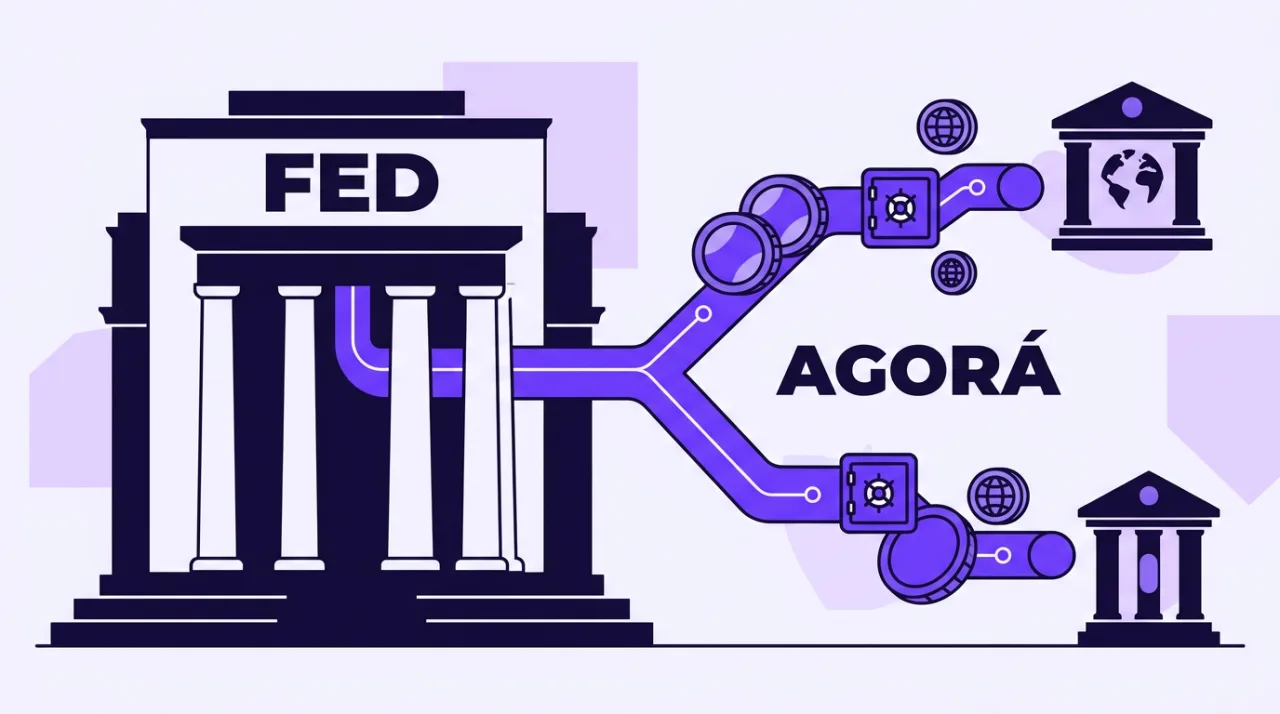
Federal Reserve Chair Kevin Warsh stated on 24 October 2026 that U.S. central bank digital currency research will continue only in wholesale formats that meet explicit congressional authorization and executive branch support. The position follows the May 2026 prototype report and July 2026 real-value testing of BIS Project Agorá, which demonstrated atomic settlement of tokenized central bank reserves across borders in roughly five seconds.
Federal Reserve CBDC Policy Holds to Legislative Requirements
Warsh reiterated that the Federal Reserve holds no position on the desirability of a retail CBDC and will not issue one absent specific legislation. This stance aligns with Executive Order 14178 issued in January 2025, which bars federal agencies from establishing or promoting retail CBDCs. Congressional proposals such as the Anti-CBDC Surveillance State Act and temporary restrictions in housing legislation that expire in 2030 further limit any retail initiative.
The Fed continues technical capacity-building through earlier experiments such as Project Cedar on cross-border distributed ledger technology. At the same time, it participates in stablecoin regulatory framework discussions under the GENIUS Act, with a public comment period that closed in September 2026. Retail issuance remains outside current plans.
Approximately 117 countries or currency unions have conducted CBDC research or pilots according to Atlantic Council tracking. The United States has diverged because of legislative opposition and a stated preference for private-sector instruments such as stablecoins and tokenized deposits.
Project Agorá Demonstrates Wholesale Settlement Gains
Project Agorá involved the New York Fed together with other major central banks and more than 40 private institutions. The July 2026 tests achieved payment-versus-payment finality across jurisdictions in about five seconds, compared with traditional T+2 cycles for cross-border wholesale payments. The layered architecture preserved each central bank’s autonomy while enabling simultaneous settlement of tokenized reserves and commercial bank deposits.

The May 2026 report noted that further work is required on technical, operational, and contractual alignment with existing legal frameworks. It did not address retail applications. Follow-on phases are expected to examine additional interoperability questions but will not alter the prohibition on retail CBDC development without new legislation.
These wholesale experiments build on the Fed’s earlier focus on tokenized central bank money for large-value payments. They do not signal any change in the requirement for explicit congressional authorization before any broader digital dollar could be considered.
Market and Regulatory Context for Future Steps
Private-sector stablecoins and tokenized deposits are positioned as nearer-term alternatives for payment efficiency. The Federal Reserve has referenced these instruments in recent policy statements while maintaining separation from retail CBDC work. International collaboration on wholesale interoperability is likely to continue through existing BIS channels.
Congress may address permanent restrictions or stablecoin rules in upcoming sessions. Any such legislation would define the boundaries for further Federal Reserve technical research. No timeline for retail digital dollar consideration has been indicated.
Frequently asked questions
Does the Federal Reserve plan to issue a retail CBDC?
Current policy requires explicit congressional authorization and executive branch support before any retail CBDC can be issued. The Fed has stated it will not proceed without that legislative step.
What did Project Agorá testing show?
July 2026 tests achieved atomic settlement of tokenized central bank reserves and commercial deposits in approximately five seconds across multiple jurisdictions, preserving each central bank’s autonomy.
How does U.S. policy differ from other countries on CBDCs?
While 117 countries or unions have researched or piloted CBDCs, the United States maintains legislative barriers and prefers private instruments such as stablecoins for payment innovation.
What happens next for U.S. wholesale experiments?
Further technical work on interoperability and legal alignment is expected through BIS channels, but retail applications remain outside the scope without new legislation.
Comments
No comments yet. Be the first!