News Central Banks
Project Meridian FX APAC Results Reveal Synchronised Settlement Across RTGS and DLT Systems
Key points
Central banks from the UK, Singapore and Thailand published joint findings on 13 November 2026 from Project Meridian FX APAC testing atomic foreign exchange settlement.

On 13 November 2026 the Bank of England, the Monetary Authority of Singapore and the Bank of Thailand released the results of Project Meridian FX APAC. The trial examined payment-versus-payment foreign exchange settlement across real-time gross settlement systems and distributed ledger technology platforms operated by the three central banks.
Project Meridian FX APAC Trial Outcomes
The experiment achieved atomic synchronised settlement in both bilateral and multilateral net configurations. A Synchronisation Operator prototype developed by Partior coordinated transfers so that linked payments occurred together or not at all. The tests covered a wider set of currencies, technologies and time zones than earlier European phases of the project.
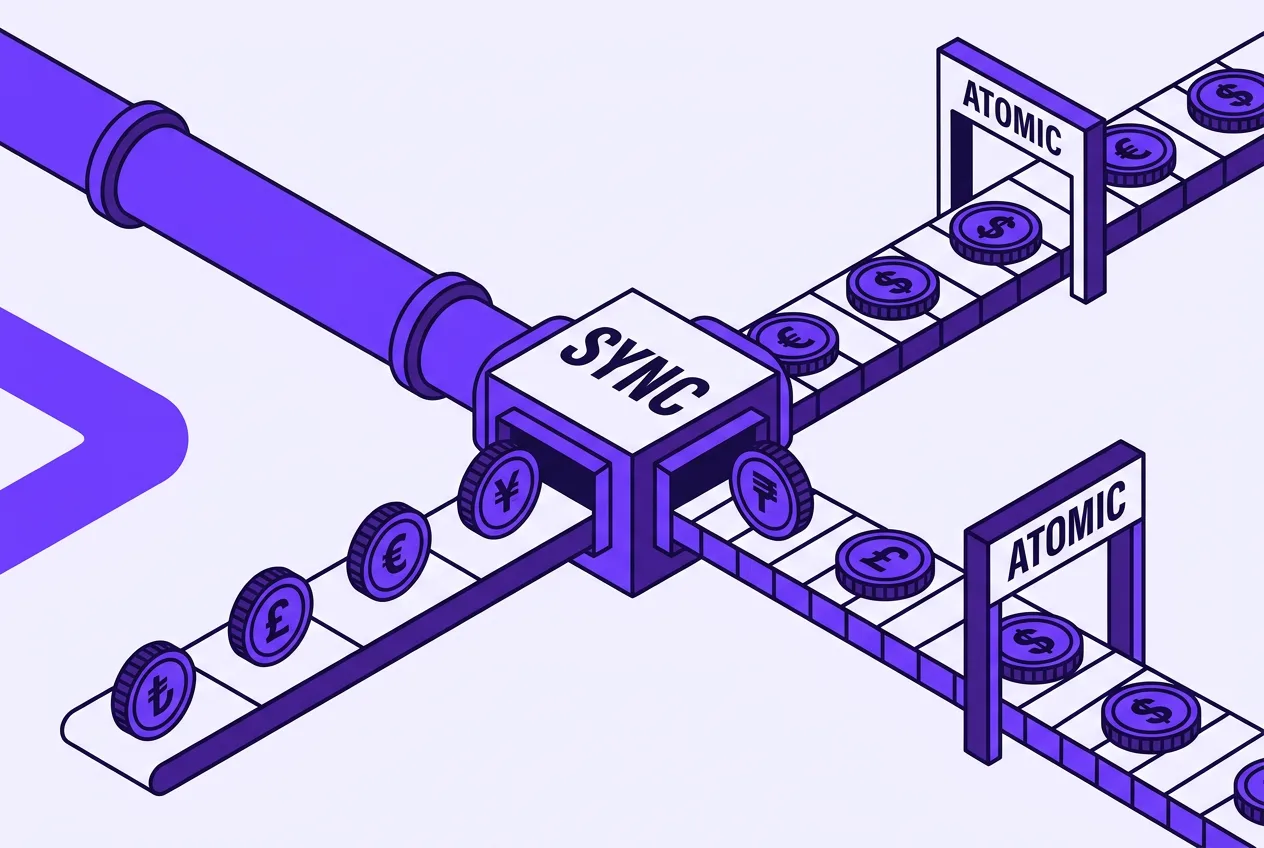
Participants demonstrated that atomic outcomes remained feasible when one leg settled on a conventional RTGS system and the other on a DLT ledger. The trial also confirmed multilateral net PvP settlement under the same atomic constraint, indicating potential liquidity savings. Exception scenarios such as insufficient funds and partial outages were handled without breaking atomicity, though non-overlapping operating hours were outside the test scope.
Partior integrated the prototype with each central bank’s test environment. Functional requirements, integration trade-offs and resilience measures were documented for future design work.
Policy Workstream and Next Steps
A parallel policy stream reviewed legal, regulatory, oversight, governance and data-sharing questions. The Reserve Bank of Australia and Bangko Sentral ng Pilipinas participated as observers. Bank of England executive Tom Mutton stated the results supply practical evidence for risk reduction and efficiency gains in cross-border FX. MAS representative Kenneth Gay noted improved interoperability across dissimilar systems. Bank of Thailand official Pucktada Treeratpituk emphasised preservation of trust in central bank money alongside operational improvements.
The findings build on the BIS-led Project Meridian FX work conducted between 2024 and 2025 and on the APAC collaboration announced in November 2025. They address the more than US$1.4 trillion in daily FX settlement exposure identified in the 2025 BIS survey. Further exploration will include additional jurisdictions, currencies and operating scenarios. The Bank of England has scheduled a live synchronisation interface for 2028.
Context for Cross-Border Payments Infrastructure
Project Meridian FX APAC extends earlier wholesale experiments that combined RTGS and DLT rails. The results supply concrete data on integration complexity and operational resilience when central banks with different settlement architectures attempt simultaneous settlement. Market participants can use the published functional requirements to assess potential adaptations for their own payment and settlement systems.
The published executive summary and technical reports detail message flows, exception handling and settlement finality considerations. These documents are available on the Bank of England website and provide a reference point for institutions evaluating atomic settlement solutions in production environments.
Frequently asked questions
What is Project Meridian FX APAC?
It is a joint trial by the Bank of England, MAS and Bank of Thailand that tested atomic payment-versus-payment settlement of foreign exchange transactions across RTGS and DLT systems.
Which entity built the Synchronisation Operator prototype?
Partior developed, integrated and tested the Synchronisation Operator that coordinates linked transfers to ensure atomic settlement.
What policy topics were examined alongside the technical tests?
The policy workstream covered legal frameworks, regulatory oversight, governance arrangements, settlement finality and data-sharing requirements.
When does the Bank of England plan a live synchronisation interface?
The Bank of England has indicated a target of 2028 for a live synchronisation interface based on the trial findings.
Comments
No comments yet. Be the first!