News Blockchain
China Blockchain Network Target Set for 2030 Under National Informatization Plan
Key points
China’s Central Cyberspace Affairs Commission released a 2026-2030 plan on October 23 that sets a 2030 target for the national blockchain network to be largely completed.
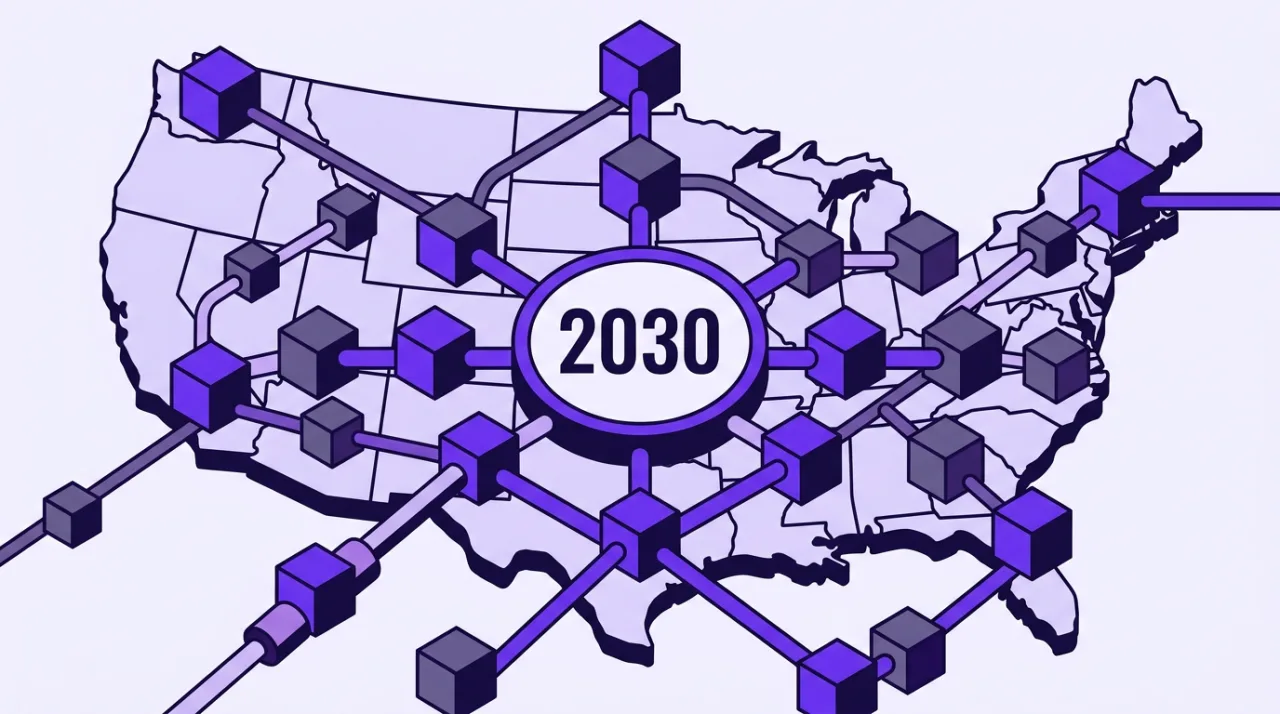
China’s Central Cyberspace Affairs Commission released the National Informatization Plan for the 15th Five-Year Period on October 23, 2026. The document sets a target for the national blockchain network to be largely completed by 2030. It forms part of broader efforts to build foundational digital infrastructure alongside next-generation communications networks and commercial 6G services.
China Blockchain Network Construction Priorities
The plan outlines a national blockchain network construction project that accelerates a central backbone network, connects regional hubs, and develops shared services such as distributed digital identity. These elements support data circulation and integration between digital systems and the real economy. Regional priorities differ by location. The Yangtze River Delta focuses on trade and finance applications. Beijing-Tianjin-Hebei emphasizes smart logistics and airports. The Greater Bay Area targets innovative uses and cross-border data flows. The Chengdu-Chongqing region stresses scaled deployment in manufacturing, agriculture, and commerce.
Applications highlighted include digitization of shipping and freight trade, government services, taxation processes, and carbon reduction tracking. The plan builds on earlier references in the March 2026 national development outline and the October 9, 2026 joint policy on new productive forces. No specific budget figures, annual milestones, or technical specifications appear in the document. Cryptocurrency trading and mining remain prohibited under existing rules.
Implementation and National Context
Implementation falls under central coordination by the Central Cyberspace Affairs Commission and the Cyberspace Administration of China, with execution handled at the regional level. Standards development and ongoing monitoring form part of the process. The plan aims for major informatization progress by 2030 to advance Chinese modernization through strengthened cybersecurity and real-economy integration. Blockchain has held national priority status since 2019, when emphasis was placed on core technology self-reliance. Pilot projects and regional hubs, including work in Shanghai, have operated for several years, with some nodes already active in trade applications.

Additional 2030 targets listed in the plan include 85 percent internet penetration and 50 5G base stations per 10,000 people. The blockchain component positions the technology as value internet infrastructure without direct linkage to other digital currency initiatives. Official statements describe the goal as advancing data circulation and digital-real economy integration under the 15th Five-Year framework.
Next Steps for Regional and Sector Deployment
Regional governments will align local projects with the national backbone while meeting sector-specific targets in trade, logistics, taxation, and carbon management. Central agencies will issue further standards and coordination mechanisms over the coming months. Existing pilot networks provide a base for expansion, though full interconnection and shared services remain tasks for the 2026-2030 period. The approach maintains separation between permitted blockchain uses and prohibited cryptocurrency activities.
Frequently asked questions
When was the national blockchain network target announced?
The Central Cyberspace Affairs Commission issued the plan on October 23, 2026, as part of the National Informatization Plan for 2026-2030.
What sectors receive priority applications under the plan?
Priority areas include shipping and freight trade, government services, taxation, carbon reduction tracking, and integration with manufacturing and agriculture.
Does the plan include cryptocurrency provisions?
No cryptocurrency trading or mining provisions appear. Existing bans remain unchanged while permitted blockchain uses advance.
Which regions have specific deployment focuses?
The Yangtze River Delta, Beijing-Tianjin-Hebei, Greater Bay Area, and Chengdu-Chongqing region each carry distinct application priorities tied to local economies.
Comments 3