News Regulation
Germany Crypto Seizure Powers Expanded as Bundestag Passes Zollfinanzgerechtigkeitsgesetz
Key points
Germany’s Bundestag passed the Zollfinanzgerechtigkeitsgesetz on 12 November 2026, introducing administrative procedures for customs to seize crypto assets above €100,000 with unclear origins.
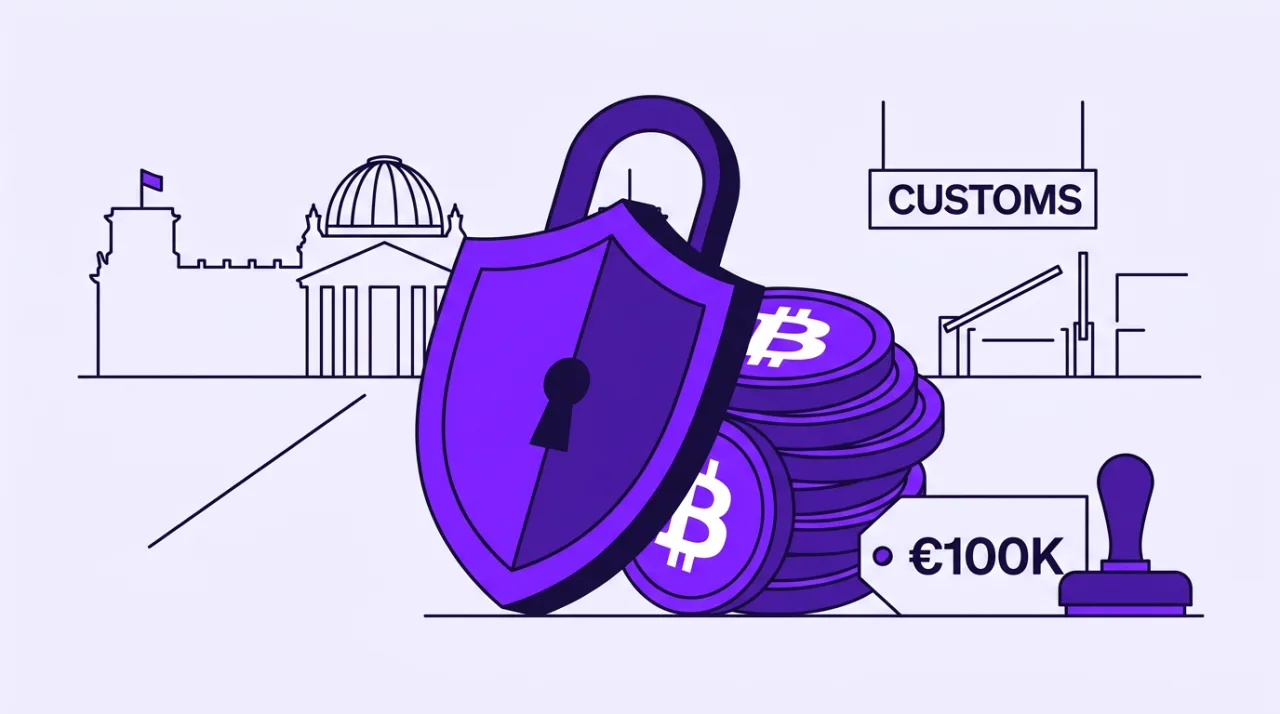
On 12 November 2026, Germany’s Bundestag passed the Zollfinanzgerechtigkeitsgesetz, giving customs authorities new administrative powers to investigate and temporarily seize crypto assets valued above €100,000 where lawful origin is in doubt. The measure forms part of federal efforts to strengthen financial crime controls without requiring prior criminal proceedings.
Germany Crypto Seizure Rules and Administrative Procedures
The law establishes an administrative route for the Zollverwaltung to secure significant assets, including crypto defined under the EU MiCA Regulation. Assets above the €100,000 threshold, or €50,000 for registerable items, may be held initially for up to 30 days. A finance court can extend that period once by a maximum of 150 days, bringing the total to roughly 180 days.

Final confiscation still requires a separate court ruling. The procedure remains civil in nature rather than criminal, and authorities must demonstrate reasonable grounds for doubting the source of funds. Crypto holdings covered include tokens, stablecoins and utility tokens that meet the MiCA definition of digital representations of value or rights.
Parliament approved the bill in second and third readings by show of hands. AfD, CDU/CSU and SPD supported passage, Die Linke opposed it, and Bündnis 90/Die Grünen abstained. The legislation originates from government draft BT-Drs. 21/8282 and incorporates amendments adopted in the Finance Committee.
Background on Customs Reform and Cross-Border Controls
The Zollfinanzgerechtigkeitsgesetz updates tools for Germany’s roughly 49,000 customs staff and responds to gaps identified in tracing cross-border financial flows. It aligns with the federal government’s February 2026 action plan against organised crime and money-laundering measures.
Officials estimate the changes could generate additional annual revenue of approximately €308 million from 2028 onward, based on modelling that assumes a 50 percent success rate across asset classes. One-time implementation costs are also budgeted. The reform targets improvements in asset tracing that include digital and crypto holdings previously difficult to address under existing rules.
Comparable measures appear in other EU jurisdictions, though Germany’s version introduces an explicit administrative threshold tied to MiCA definitions. The approach avoids immediate criminal classification while still requiring judicial oversight for permanent confiscation.
Next Steps After Bundestag Passage
The bill requires Bundesrat consent before promulgation. If approved, most provisions are scheduled to enter into force on 1 January 2027, with possible staggered implementation for certain articles. No substantive alterations to the core seizure mechanisms have been reported since the Bundestag vote.
Implementation will depend on updated internal guidelines for customs investigators and coordination with finance courts. Market participants holding large crypto positions may face additional documentation requirements once the law takes effect.
Frequently asked questions
What assets does the new German law cover?
The Zollfinanzgerechtigkeitsgesetz covers crypto assets meeting the MiCA definition, along with other significant assets above €100,000 where origin is unclear. It applies to tokens, stablecoins and utility tokens.
How long can customs hold seized crypto?
Initial administrative seizure lasts up to 30 days. A finance court may extend the period once by up to 150 days, for a maximum total of about 180 days before further judicial steps are required.
When does the law enter into force?
The bill still needs Bundesrat approval and formal promulgation. Current planning sets the main entry into force for 1 January 2027, subject to possible staged rollout of certain articles.
Does the procedure require criminal charges first?
No. The law creates an administrative route that allows customs to act without first opening criminal proceedings, though final confiscation still needs a court decision.
Comments
No comments yet. Be the first!