News JPMorgan
JPM Coin Ethereum Mainnet Launch Gives Institutions Access to Deposit Tokens
Key points
JPMorgan placed its USD deposit token JPM Coin on Ethereum mainnet on October 19, 2026, extending permissioned access to institutional clients through the Kinexys platform.
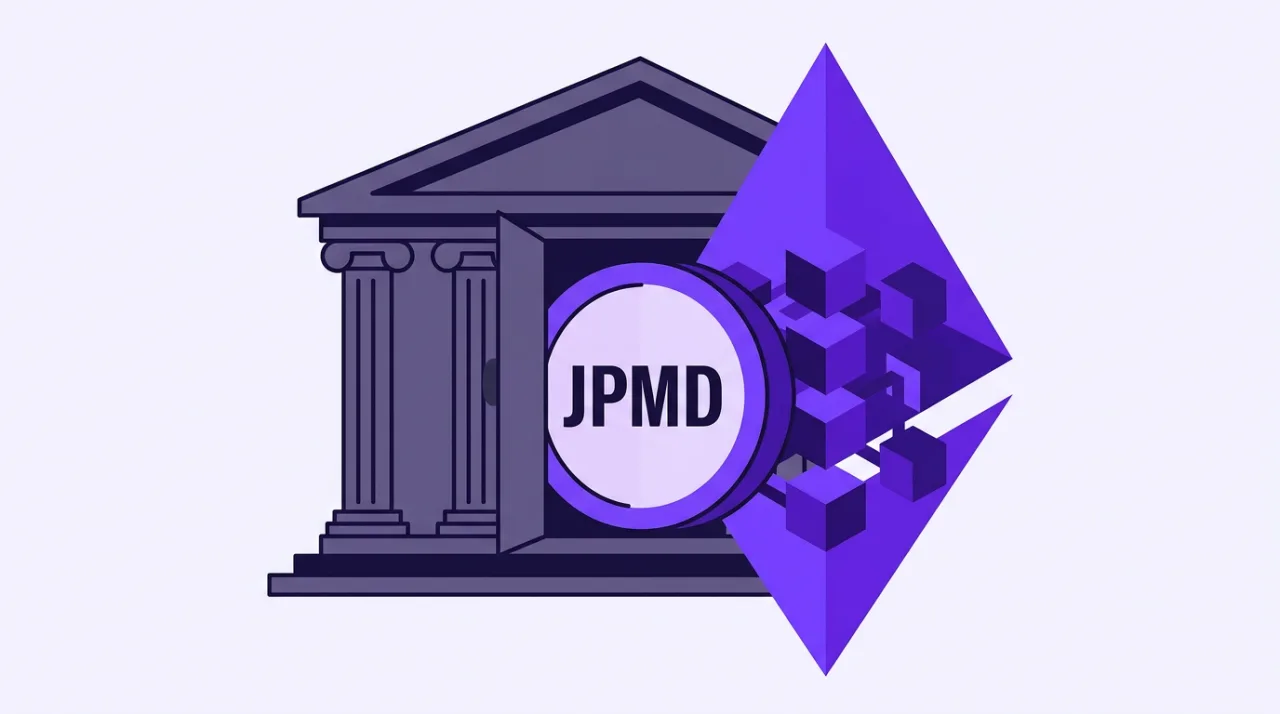
JPMorgan Chase placed its USD-denominated deposit token JPM Coin on Ethereum mainnet on October 19, 2026. The move gives vetted institutional clients access to the token through the bank’s Kinexys blockchain unit for on-chain payments, trade settlement, and collateral use.
JPM Coin Ethereum Technical Details and Access Rules
The token, ticker JPMD, represents existing U.S. dollar deposits held in JPMorgan accounts on a one-to-one basis. Funds stay inside the bank’s regulated deposit infrastructure and can be redeemed for USD at any time without lock-up periods. The contract address published by JPMorgan is 0xb2906cCED1b2c8330480414CeFA1eb52bDBd73A3 on Ethereum.
Access remains permissioned and limited to pre-approved institutional counterparties. No retail accounts or public exchanges can hold or trade the token. Early on-chain data after launch showed zero circulating supply, consistent with controlled minting by the issuer.
JPM Coin first appeared on Coinbase’s Base network in November 2025 after pilots with Coinbase, Mastercard, and B2C2. The Ethereum mainnet step adds direct peer-to-peer transfers across EVM-compatible chains and pairs the token with already-deployed tokenized money-market funds from JPMorgan Asset Management.
Context Within JPMorgan Tokenization and Kinexys Volume
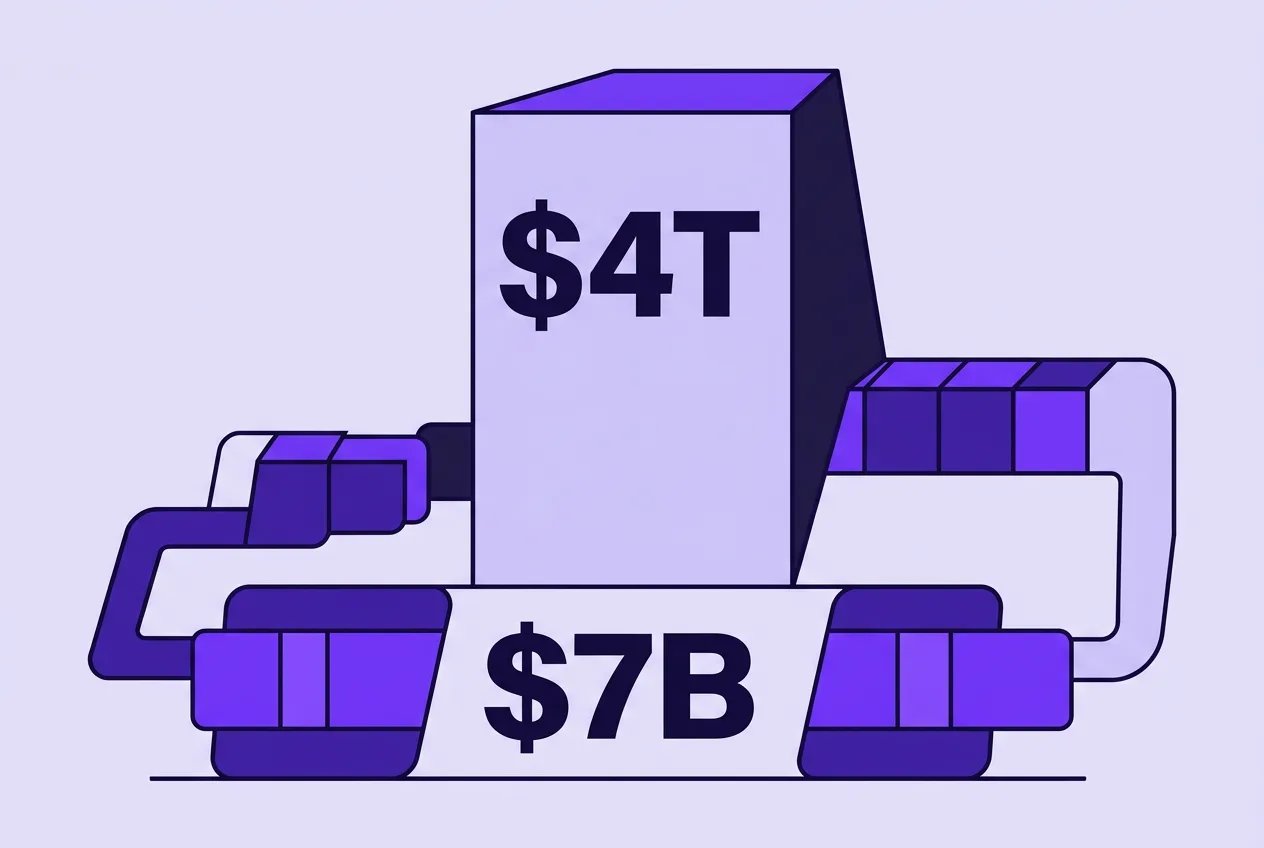
Kinexys, formerly Onyx, forms the bank’s broader blockchain payments business. As of the October announcement the platform had processed more than $4 trillion in cumulative transactions and maintained roughly $7 billion in average daily volume. The Ethereum deployment expands settlement options beyond private permissioned networks.
JPMorgan selected Ethereum for its liquidity depth and existing tokenized-asset ecosystem. The bank’s asset-management unit already runs two tokenized money-market funds on the chain, launched in December 2025 and May 2026. The deposit token complements those products for wholesale clients seeking 24/7 near-instant movement of value alongside other on-chain instruments.
Planned further integrations include the Canton Network. No adoption or volume figures for the Ethereum deployment have been released yet.
Market Implications for Institutional Blockchain Use
The launch illustrates how regulated banks continue to map deposit claims onto public blockchains while keeping funds inside traditional banking rails. Institutional users gain an additional settlement rail for cross-border payments and collateral without converting deposits into external stablecoins.
Comparable efforts by other large institutions focus on private or consortium chains, yet JPMorgan’s choice of Ethereum mainnet plus Base broadens interoperability with existing tokenized assets. The permissioned model keeps regulatory oversight intact and aligns with ongoing industry work on tokenized deposits and wholesale settlement infrastructure.
Frequently asked questions
What is JPM Coin and how does it differ from a stablecoin?
JPM Coin represents existing U.S. dollar deposits held at JPMorgan on a one-to-one basis. The funds remain in the bank’s regulated accounts and can be redeemed for USD at any time, unlike stablecoins that operate outside bank deposit structures.
Who can access JPM Coin on Ethereum?
Only pre-approved institutional clients vetted by JPMorgan’s Kinexys unit may hold or transfer the token. Retail investors and public exchanges have no access.
When did JPM Coin first appear on a blockchain network?
The token launched on Coinbase Base in November 2025 after earlier pilots. The Ethereum mainnet deployment occurred on October 19, 2026.
What settlement benefits does the Ethereum version provide?
Clients gain peer-to-peer transfers across Ethereum and Base with 24/7 near-instant settlement, while keeping funds inside JPMorgan’s deposit infrastructure.
Comments
No comments yet. Be the first!