News Stablecoins
Canada stablecoin rules propose direct redemptions for retail holders with 1% fee cap
Key points
Canada’s Department of Finance released proposed stablecoin regulations on October 24, 2026, mandating direct redemptions at par value with a maximum 1% fee for all holders.

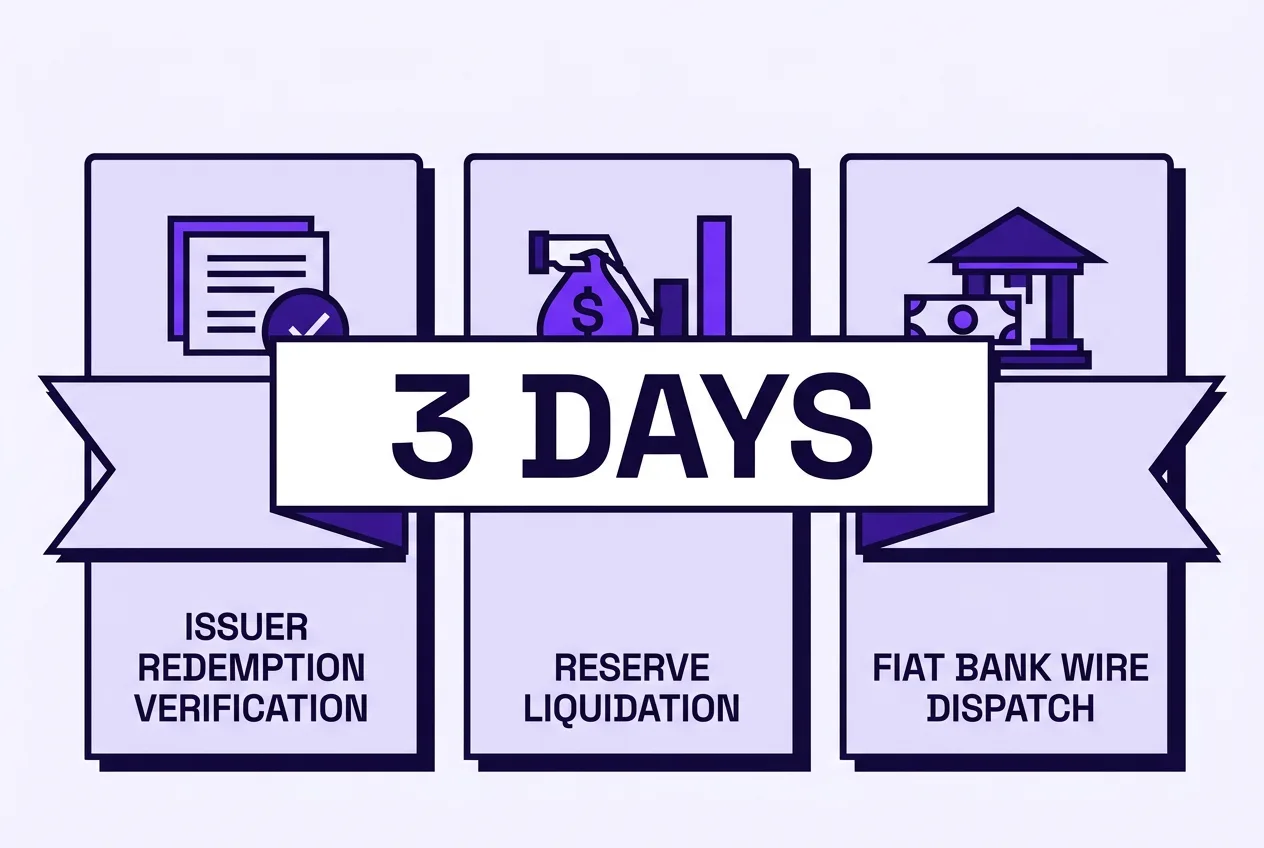
Canada’s Department of Finance published proposed Stablecoin Regulations on October 24, 2026, in the Canada Gazette. The draft requires issuers of fiat-backed stablecoins available in Canada to redeem tokens at par value in the reference currency for any balance without a minimum amount. Redemptions must occur within three business days, and fees cannot exceed 1% of the redeemed amount.
Proposed redemption rules and issuer obligations
The rules appear in proposed Section 15 of the draft. Issuers must complete the steps they control, such as liquidating reserves and initiating the fiat transfer, inside the three-day window. The recipient bank’s crediting time falls outside the issuer’s obligation. Daily redemption limits are allowed only when reserve-asset market liquidity shortages prevent full fulfillment of requests. The 1% fee cap remains in force even under such limits.
Issuers must publish redemption policies on their websites and give seven days’ notice before changing or raising fees. The framework applies to both domestic and foreign issuers that make tokens available to Canadian users. Prudentially regulated banks and certain foreign or provincial regimes with equivalent standards may qualify for exemptions. The Minister of Finance retains national security review powers.
Reserve requirements reinforce these obligations. Non-bank issuers must maintain daily 1:1 holdings of high-quality liquid assets in the reference currency at a Canadian-incorporated custodian. Assets must be segregated and bankruptcy-remote. Issuers must also register with the Bank of Canada and maintain governance, risk-management, and data-security policies.
Regulatory context and consultation timeline
The Stablecoin Act received Royal Assent on March 26, 2026, but its core provisions are not yet in force. The new draft regulations aim to balance consumer protection with issuer viability. The regulatory impact statement notes that typical market redemption fees sit near 0.1%, so the 1% ceiling provides room for smaller Canadian issuers while preventing excessive charges.
Canada’s approach aligns with similar frameworks such as the U.S. GENIUS Act and EU MiCA. The Bank of Canada will oversee registration, prudential standards, and ongoing supervision, building on its existing role under the Retail Payment Activities Act. The regulations exclude institutions already subject to prudential oversight and allow possible exemptions for substantially similar foreign or provincial regimes.
A 60-day public consultation runs until December 23, 2026, at 11:59 p.m. EST. Comments will inform final rules intended for implementation in fall 2027 alongside the Act. The Department of Finance stated the measures seek to protect holders, encourage competition and innovation, and support financial stability without introducing retail-specific thresholds that remain undefined in the current text.
Market implications for issuers and holders
Issuers operating in Canada must prepare systems that support same-day or next-day processing of redemption requests up to the three-day statutory limit. Smaller issuers may need to adjust fee structures and liquidity management to stay within the cap while remaining commercially viable. Foreign platforms that serve Canadian users will face the same registration and operational requirements.
Retail holders gain a statutory right to redeem any amount at par, subject only to the 1% fee ceiling and documented exceptions for liquidity shortages. The absence of minimum redemption thresholds removes barriers that exist in some other jurisdictions. Market participants can submit feedback during the consultation period to shape final wording on liquidity exceptions and oversight procedures.
Frequently asked questions
What is the proposed redemption timeline under Canada stablecoin rules?
Issuers must complete redemption steps they control within three business days of a request. The period covers reserve liquidation and fiat transfer initiation but does not require the recipient bank to credit funds inside that window.
How does the 1% fee cap affect stablecoin issuers?
The cap limits charges to 1% of the redeemed amount. Issuers must provide seven days’ website notice before any fee increase. The limit applies even during liquidity-shortage exceptions that may restrict daily volumes.
Which entities must register with the Bank of Canada?
Non-bank fiat-backed stablecoin issuers, both domestic and foreign, that make tokens available in Canada must register. Prudentially regulated financial institutions such as banks are excluded from this requirement.
When will the final Canada stablecoin regulations take effect?
The current 60-day consultation ends December 23, 2026. Final rules are scheduled for implementation in fall 2027 by Governor in Council order once the Stablecoin Act provisions are brought into force.
Comments
No comments yet. Be the first!