News DeFi
UK FCA DeFi Rules Advance After Binance Hack Raises Laundering Concerns
Key points
The FCA cited the $6.3 billion October hack to justify stricter DeFi authorisation under its cryptoasset regime. Final guidance is due in January 2027.
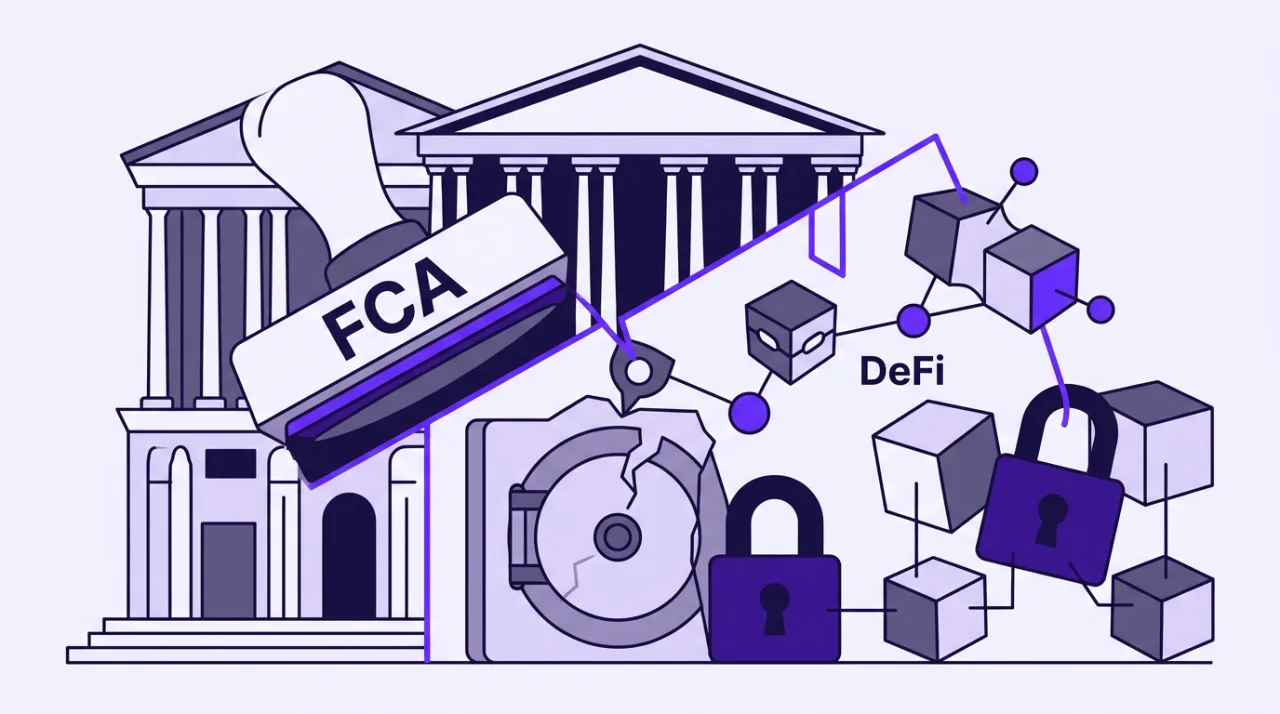
The UK Financial Conduct Authority on 26 November 2026 announced it will advance authorisation requirements for decentralised finance platforms under its incoming cryptoasset regime. Officials pointed to the 29 October Binance hack, which saw roughly $6.3 billion drained from hot wallets, as evidence of heightened fraud, scam and money-laundering risks and limited consumer recovery options.
Details of the FCA announcement and the October hack
The FCA statement followed two consultations that closed on 18 November: GC26/7 on DeFi operational resilience and financial crime guidance, and CP26/36 on the cryptoasset perimeter. Both opened on 21 October. The regulator plans to issue final guidance in January 2027 or the first quarter of that year. The new regime, which includes authorisation for qualifying cryptoasset trading platforms, dealing, arranging, staking and custody activities, takes effect on 25 October 2027. The authorisation gateway opened on 30 September 2026 and remains open for transitional applications until 28 February 2027.
The $6.3 billion loss occurred when attackers, attributed by the FBI, TRM Labs and Chainalysis to the North Korea-linked TraderTraitor group, drained wallets across approximately ten blockchains in roughly twenty minutes. Ethereum accounted for about $3.8 billion and Bitcoin for $1.5 billion. Binance covered more than $6 billion of the loss from its own funds, froze around $2.7–3 billion through partners including Tether and Circle, and reopened withdrawals on 1 November. Between $2.1 billion and $2.35 billion remained unrecovered or unfrozen as of mid-November.
Hackers routed stolen assets, including stablecoins, rapidly through DeFi protocols such as THORChain for swapping and mixing. This speed and scale frustrated freeze and tracing efforts. FCA Head of Payments & Digital Assets Jane Moore noted that the movement of funds through DeFi can frustrate attempts to freeze and block transfers. The authority described its approach as deliberately stricter than rules in the United States and European Union because of gaps in consumer protection.
Scope of the proposed regime and industry context
The FCA intends to apply existing perimeter tests to DeFi on a case-by-case basis rather than granting automatic exclusion for decentralised structures. Firms that control or materially influence protocols will fall within scope. Additional proposals require all UK retail equity orders, whether tokenised or not, to execute on regulated platforms, preventing routing to offshore or unregulated venues. The guidance will clarify application of SYSC 15A on operational resilience and SYSC 6 together with the Money Laundering Regulations, without creating entirely new rule sets.
The move builds on the FCA’s earlier crypto roadmap set out in PS26/11 and related documents. Industry groups including the DeFi Education Fund have asked for clearer definitions around the responsibilities of developers and governance participants. Firms will need to decide before the October 2027 deadline whether to seek authorisation, restructure operations or restrict access for UK users. Parallel recovery actions continue, including US Department of Justice proceedings exceeding $1.2 billion and freezing orders issued in Abu Dhabi.
Timeline and next steps for platforms
Final guidance expected in January 2027 will give firms a clear window to prepare applications or adjust business models ahead of the October 2027 commencement date. Platforms already operating in the UK must assess whether their activities trigger authorisation requirements under the new perimeter tests. Those that fail to obtain authorisation by the transitional deadline risk enforcement action once the regime is fully in force.
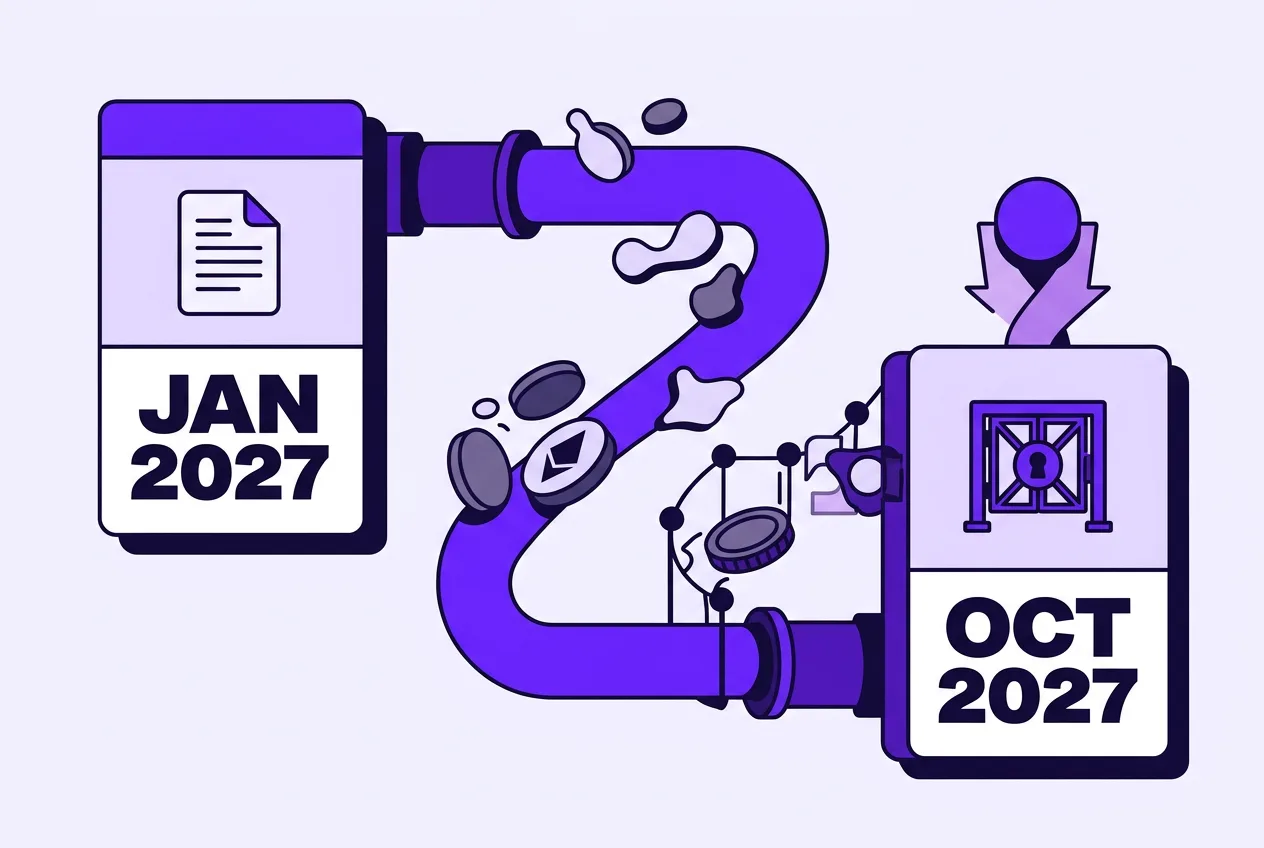
Regulators will continue to monitor laundering typologies demonstrated in the Binance incident, particularly the rapid movement of funds across multiple blockchains. Firms are advised to review existing financial crime controls against the forthcoming SYSC and MLR clarifications. Ongoing tracing efforts by law enforcement and private analytics firms may produce further freezes or legal actions in the months ahead.
Frequently asked questions
When will the FCA issue final DeFi guidance?
Final guidance from the two consultations that closed in November 2026 is expected in January 2027 or during the first quarter of 2027.
Which activities require FCA authorisation under the new regime?
Authorisation will cover qualifying cryptoasset trading platforms, dealing, arranging, staking and custody services once the regime takes effect on 25 October 2027.
How did the Binance hack affect FCA policy on DeFi?
The regulator cited the rapid routing of stolen funds through DeFi protocols as evidence that existing controls can be frustrated, prompting stricter authorisation requirements.
What must DeFi platforms do before October 2027?
Platforms must decide whether to apply for authorisation, restructure operations or restrict UK user access ahead of the 25 October 2027 start date.
Comments
No comments yet. Be the first!