News Crypto Regulation
South Korea Stablecoin Rules Advance as Forex Law Amendment Takes Shape
Key points
South Korea's government and Bank of Korea are preparing a Foreign Exchange Transactions Act amendment to classify stablecoins as means of payment.
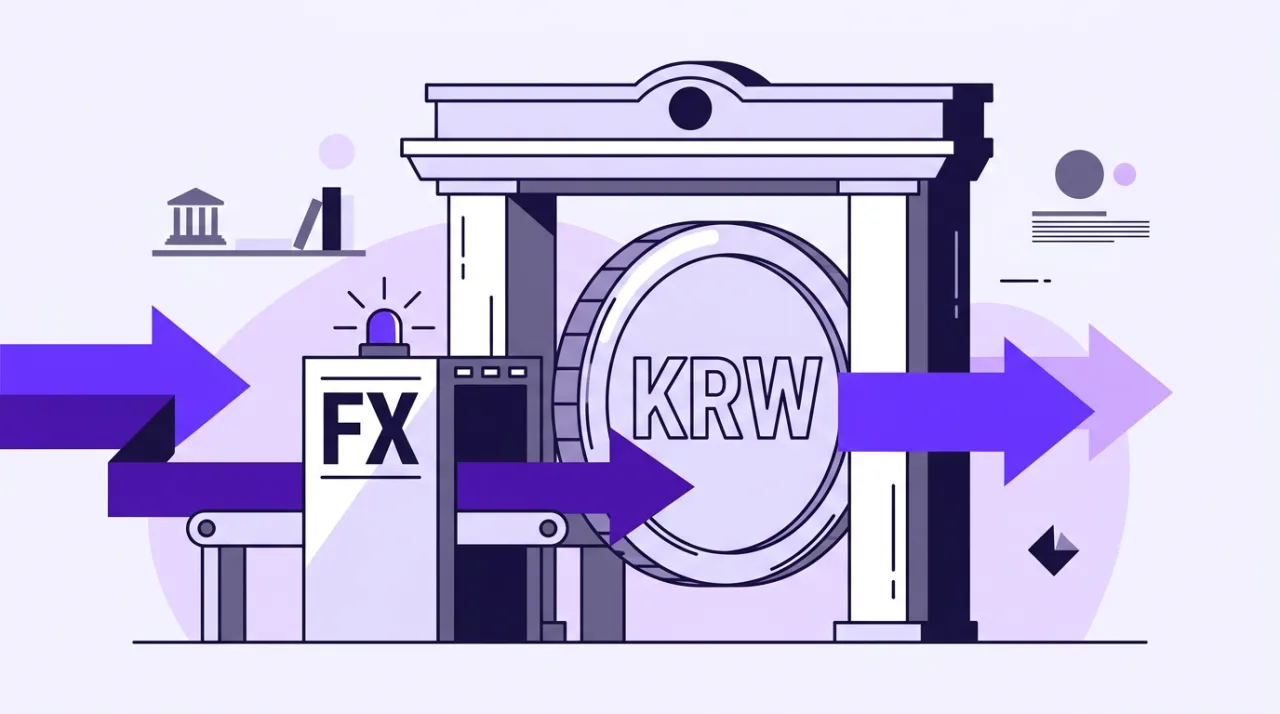
South Korea's government and the Bank of Korea confirmed plans on October 22-23, 2026, to draft an amendment to the Foreign Exchange Transactions Act this year. The change would classify stablecoins as means of payment, triggering cross-border reporting requirements similar to those for banknotes and other traditional instruments.
The measure addresses unregulated flows of dollar-pegged stablecoins such as USDT and USDC. It aims to reduce money laundering and tax evasion risks without granting legal-tender status.
Details of the Proposed FETA Amendment
The amendment targets cross-border stablecoin movements by placing them under existing forex oversight. Operators would face the same reporting obligations that apply to conventional payment instruments. This framework runs alongside a new virtual asset monitoring system under development by the Bank of Korea.
A May 2026 FETA amendment already requires virtual asset transfer businesses, including those handling cross-border crypto transactions to unhosted wallets, to register with the Ministry of Economy and Finance. Non-compliance carries penalties of up to three years in prison. Public consultation on the related enforcement decree closes around October 26, 2026.
The forex changes complement the broader Digital Asset Basic Act. That legislation covers exchange licensing, stablecoin issuance standards, and market definitions. Financial Services Commission Chairman Lee Eog-weon stated that consultations are in final stages, with a bill introduction targeted as soon as possible and National Assembly subcommittee review scheduled for November 2026.
Background on Regulatory Context and Parallel Measures
The initiative responds to concerns raised during the 2025 National Assembly audit about gaps in payment infrastructure and money laundering risks linked to global crypto platforms. The Bank of Korea is expanding its FX network reporting systems and strengthening international cooperation to limit arbitrage opportunities.
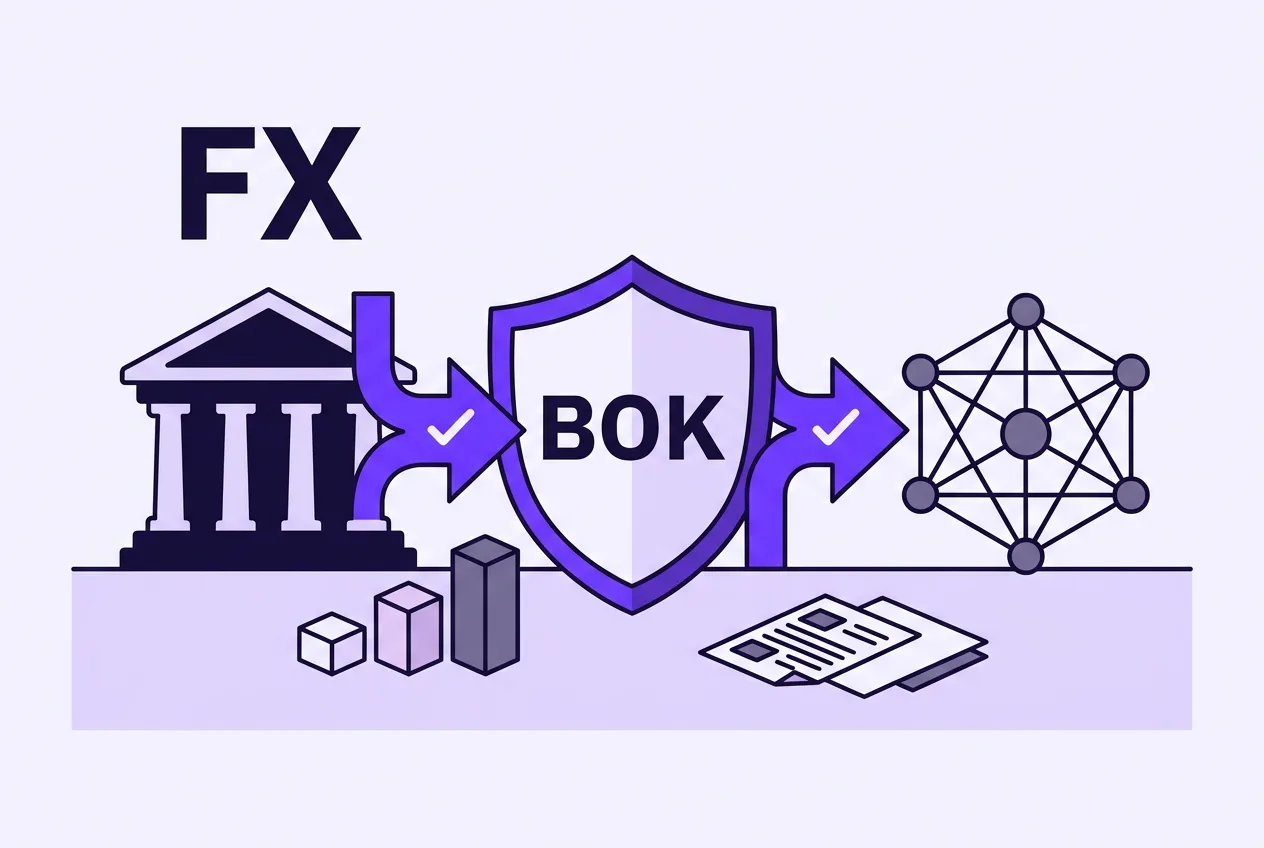
Discussions within the Digital Asset Basic Act continue on won-denominated stablecoin issuance. Proposals under review include requirements for bank-led consortia holding at least a 50 percent plus one stake. Bank of Korea Governor remarks have stressed private-sector issuance rather than central bank operation of stablecoins, while wholesale CBDC pilots such as Project Hangang move forward.
The forex amendment aligns with earlier regulatory steps. It does not introduce new stablecoin tokens or final draft text. Officials have not confirmed specific passage dates for this bill.
Timeline and Related Developments
Bill drafting and inter-agency coordination are expected to conclude before the end of 2026. Forex measures target implementation by year-end. The Digital Asset Basic Act faces November review and potential enactment in 2026 or early 2027.
Separate tax policy debates continue around the 22 percent crypto gains tax scheduled for January 1, 2027. Some lawmakers have called for a delay. The Bank of Korea continues to build monitoring tools and international partnerships to support the new oversight regime.
Frequently asked questions
What does the FETA amendment change for stablecoins?
It classifies stablecoins as means of payment under the Foreign Exchange Transactions Act, requiring cross-border reporting and oversight similar to traditional instruments.
When will the South Korea stablecoin bill be introduced?
Government consultations are in final stages with introduction planned as soon as possible and National Assembly subcommittee review expected in November 2026.
How does this affect existing virtual asset transfer rules?
It builds on the May 2026 FETA amendment that already mandates registration for virtual asset transfer businesses handling cross-border moves, with penalties up to three years imprisonment for non-compliance.
Will won-denominated stablecoins face new issuance rules?
The Digital Asset Basic Act continues to discuss bank-led consortia requirements, while the Bank of Korea favors private-sector issuance over central bank operation.
Comments
No comments yet. Be the first!