News CBDC
E-Krona Legislative Preparation Urged by Riksbank in Letter to Riksdag Committee
Key points
Sweden’s central bank has asked the Riksdag to begin work on legal changes for a possible retail CBDC without committing to issuance.
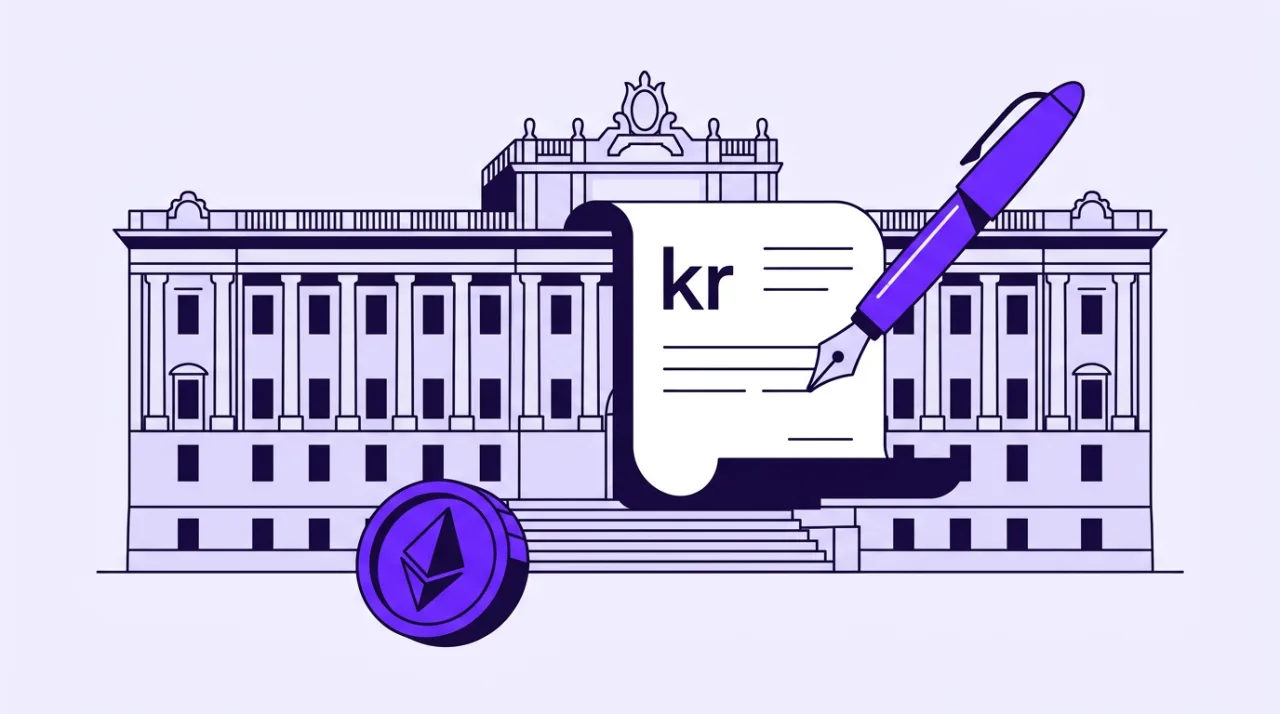
On 15 October 2026 Sweden’s Riksbank submitted an official letter (ref. 2026-01419) to the Riksdag’s Committee on Finance. The document calls for preparatory legislative work on a retail central bank digital currency, known as the e-krona, while stressing that no decision on issuance has been taken.
Key Drivers Cited in the Riksbank Letter
The letter lists several external developments that have prompted the request. The European Central Bank continues trilogue negotiations on a digital euro, with a 12-month pilot involving around 36 providers scheduled for the second half of 2027. Global stablecoin market capitalisation reached roughly 300 billion dollars by mid-2026, dominated by USDT and USDC. Sweden’s own payment habits have shifted further toward digital channels: a recent Riksbank survey showed only 5 percent of respondents used cash for their most recent purchase, down from 10 percent in 2023.
Additional factors include the need for offline payment capability during geopolitical tensions or cyber incidents and the preservation of monetary sovereignty in a cash-light economy. The Riksbank notes that any future issuance would require separate Riksdag approval under Chapter 4, Section 9 of the Sveriges Riksbank Act (2022:1568). A 2023 government Payments Inquiry had concluded that societal need was then insufficient, yet the March 2026 Payments Report recommended a fresh legislative review.
The letter does not propose immediate issuance or technical build-out. Instead it asks the Finance Committee to authorise a public inquiry that could draft a dedicated act and identify amendments required across existing statutes governing payments, data protection and financial supervision.
Implementation Timeline and Practical Steps
Riksbank officials estimate that technical infrastructure, testing with banks and payment-service providers, and possible alignment with ECB platforms would require at least five years once legislation is in place. Drafting and passing new laws would add further time. The proposed inquiry is therefore framed as a low-cost preparatory measure that would allow faster action if circumstances change.

Any resulting framework would need to address offline functionality, limits on holdings, privacy standards and interoperability with existing payment rails. Coordination with commercial banks would also be required to ensure distribution channels remain viable in a market where cash use continues to decline. No inquiry has been formally launched as of 24 October 2026.
Market and Regulatory Context for Sweden CBDC
The Riksbank’s move occurs alongside regulatory milestones in other jurisdictions. The EU’s MiCA framework for stablecoins is already operational, while the US GENIUS Act has set standards for payment stablecoin issuers. These rules reduce some risks but also highlight that most large stablecoins remain denominated in foreign currencies. A Swedish e-krona could therefore function as a neutral domestic alternative that supports competition and financial inclusion without replacing private-sector solutions.
Parliamentary consideration of the letter is the immediate next step. Should the Finance Committee recommend an inquiry, the government would decide on its scope and timeline. Separate Riksdag votes would still be needed before any technical development or public launch could proceed.
Frequently asked questions
What exactly did the Riksbank request in its October 2026 letter?
The letter asks the Riksdag’s Finance Committee to authorise a public inquiry that would prepare draft legislation for a possible e-krona retail CBDC. No commitment to issue the currency is included.
How long would full e-krona implementation take if legislation passes?
Riksbank estimates indicate at least five years for technical development, testing and integration with banks after any law is enacted, plus additional time for the legislative process itself.
Does the letter change the Riksbank’s position on issuing a CBDC?
No. The letter explicitly states that the central bank has not taken a position on issuance and that any future decision would require separate parliamentary approval under the Sveriges Riksbank Act.
Why is the digital euro mentioned as a factor?
Trilogue negotiations on the digital euro are expected to conclude in 2026, followed by a pilot in 2027. The Riksbank views this timeline as relevant to Sweden’s own legislative preparedness.
Comments
No comments yet. Be the first!