News Crypto Regulation
Greece Crypto Tax Approved as Parliament Sets 10% Capital Gains Rate and 15% DeFi Levy From 2027
Key points
Greece’s parliament passed the country’s first dedicated crypto tax rules on November 5, introducing a 10% capital gains tax and a 15% levy on DeFi income from 2027.

Greece’s parliament approved a comprehensive crypto tax framework on November 5, 2026, as part of a 390-article omnibus bill covering articles 42–57. The legislation introduces a 10% capital gains tax on net gains from crypto-asset transfers for individuals, effective January 1, 2027, along with a 15% tax on income from staking, lending, liquidity provision and other DeFi activities.
Key Provisions of the New Crypto Tax Rules
The law taxes net gains from sales of crypto assets for fiat currency, purchases of goods or services with crypto, and contributions of crypto to company capital. Annual net gains below €500 remain exempt; once the threshold is crossed, the entire net gain becomes taxable at 10%. Losses exceeding €500 may be carried forward for up to five years but can only offset future crypto gains. Crypto-to-crypto swaps receive non-taxable treatment according to the Finance Ministry’s explanatory materials, although parliamentary advisers noted possible ambiguity that may require later clarification.
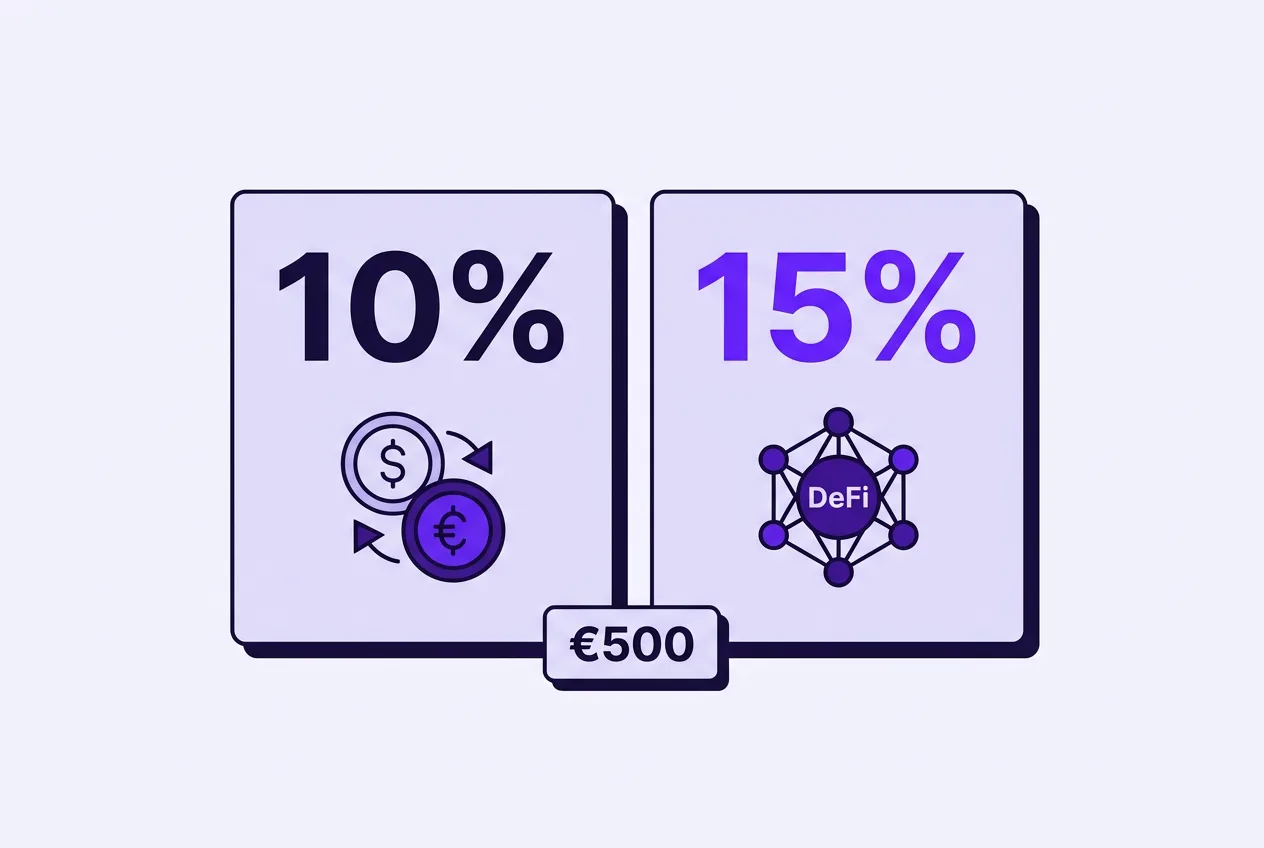
Income classified as interest from staking, crypto lending, liquidity provision and DeFi yields faces a flat 15% tax rate. The measure replaces earlier draft proposals that had suggested a 15% capital gains rate. Greece previously operated without a dedicated crypto tax regime, relying instead on general income and capital gains provisions that offered limited guidance for virtual assets.
A 12-month voluntary disclosure period begins once the law is published in the Government Gazette. Participants can declare pre-2027 gains without late-filing penalties or interest, provided the tax due is paid within 60 days of disclosure. Further implementation directives covering documentation requirements, audit procedures, cost-basis verification and information exchange are expected from the Independent Authority for Public Revenue in consultation with the Hellenic Capital Market Commission and the Bank of Greece.
Enforcement Outlook and Revenue Considerations
Revenue impact remains difficult to project because most Greek investors currently use foreign platforms. Enforcement will depend on EU DAC8 reporting obligations and other automatic exchange mechanisms. The Independent Authority for Public Revenue will issue detailed rules on zero-basis default when cost records are absent and on transparency obligations for platforms operating in Greece.
The legislation aligns Greece with emerging EU standards on virtual asset taxation while maintaining a lower capital gains rate than initially proposed. Market participants will monitor the forthcoming technical directives for clarity on record-keeping, audit triggers and cross-border reporting timelines. Institutional and retail holders alike should review existing positions ahead of the January 2027 effective date to ensure compliance with the new net-gain calculation and exemption mechanics.
Legislative Timeline and Next Steps
The bill passed on November 5, 2026, and awaits publication in the Government Gazette to become law. Once published, the voluntary disclosure window opens immediately. The Independent Authority for Public Revenue is scheduled to release supporting circulars and guidance documents in the coming weeks, including templates for cost-basis documentation and procedures for loss carry-forward claims.
Market observers expect the new framework to increase reporting obligations for foreign exchanges serving Greek clients. Taxpayers holding positions across multiple jurisdictions should prepare records now to meet the documentation standards outlined in the forthcoming directives. The combination of a modest capital gains rate, an annual exemption threshold and a separate DeFi income levy creates a distinct compliance environment that differs from many other EU member states.
Frequently asked questions
When does the 10% crypto capital gains tax in Greece start?
The tax applies to transfers occurring on or after January 1, 2027. The law must first be published in the Government Gazette before the voluntary disclosure window opens.
How does Greece tax DeFi income under the new rules?
Staking rewards, lending interest, liquidity provision yields and other DeFi income are treated as interest income and taxed at 15%. This rate applies separately from the 10% capital gains levy.
What exemption exists for small crypto gains in Greece?
Net gains up to €500 per year are exempt. Once net gains exceed this amount, the full net gain is subject to the 10% rate, with losses above €500 eligible for five-year carry-forward against future crypto gains.
Are crypto-to-crypto swaps taxable in Greece?
According to the Finance Ministry’s explanatory materials, crypto-to-crypto swaps are treated as non-taxable events. Parliamentary advisers flagged potential ambiguity that may require future clarification through implementing rules.
Comments
No comments yet. Be the first!